English
 中文简体
中文简体

Quick Product Search
Contact us to learn how we can use our expertise to bring you high-quality products.
2026-08-13
AC motors reduce washing machine vibration by delivering steady, evenly distributed rotational force to the drum while working alongside counterweights, suspension springs, and dampers that absorb irregular movement caused by unbalanced loads. This combination keeps the drum spinning on a controlled axis rather than shaking against the outer casing, which in turn lowers mechanical stress on bearings, belts, and the motor shaft itself. Over years of use, this reduced stress translates directly into fewer part failures and a longer functional life for the entire appliance.
Vibration in a washing machine originates mainly from uneven weight distribution inside the drum. Wet clothing rarely settles into a perfectly symmetrical arrangement, so as the drum accelerates, one side often carries more mass than the other. This imbalance creates centrifugal force that pushes outward unevenly, and if left unmanaged, that force travels through the drum shaft into the motor mounts and cabinet frame. A drum spinning at 1000 to 1400 RPM during the spin cycle can amplify even a small imbalance into noticeable shaking, which is why motor and suspension design work together rather than in isolation.
Beyond load imbalance, vibration also stems from the motor's own rotational characteristics. Older motor designs relied on brushes and simpler winding arrangements that produced small torque fluctuations during rotation. These fluctuations, though minor individually, accumulate into a rhythmic pulsing that riders through the drum and frame. Newer AC motor configurations smooth out these torque variations, which reduces the baseline vibration even before any load imbalance is considered.
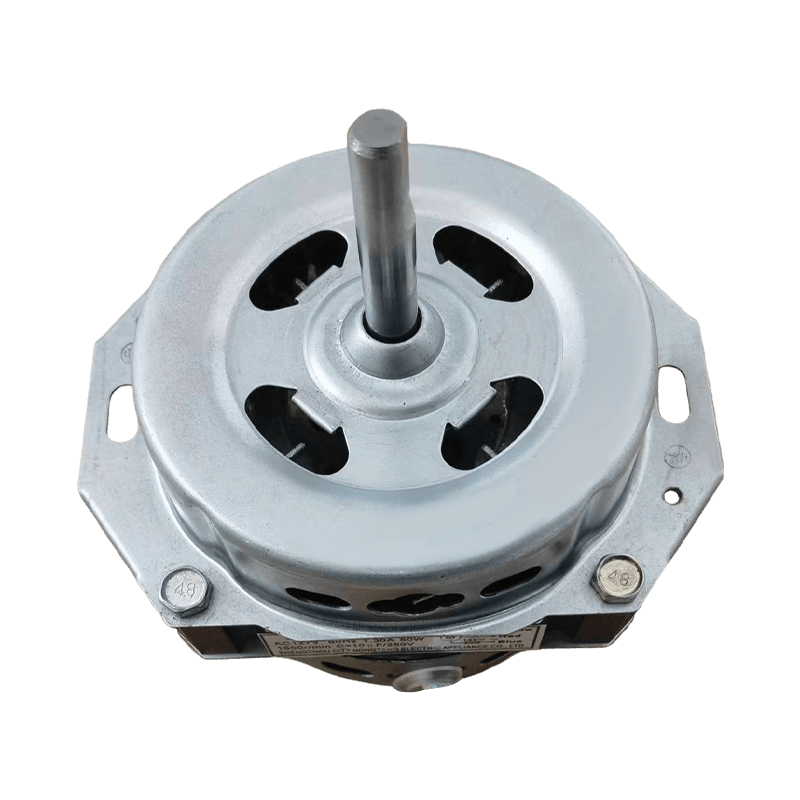
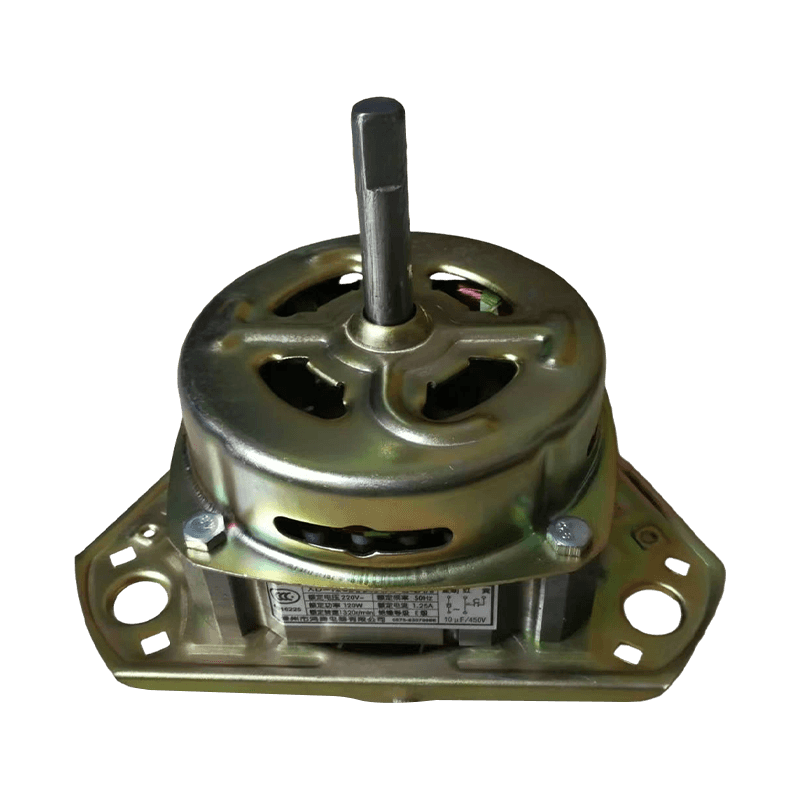
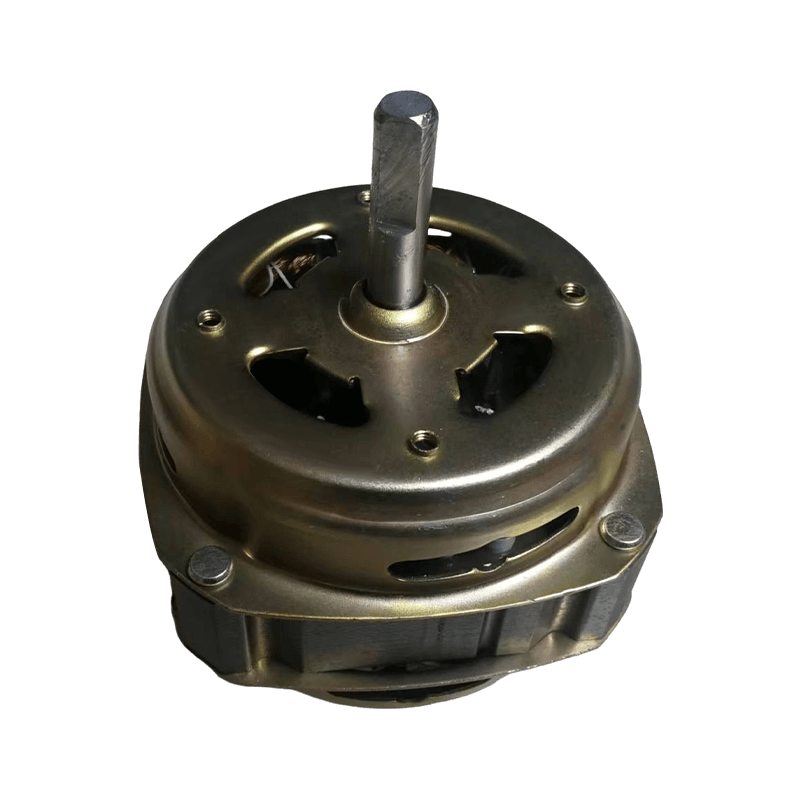
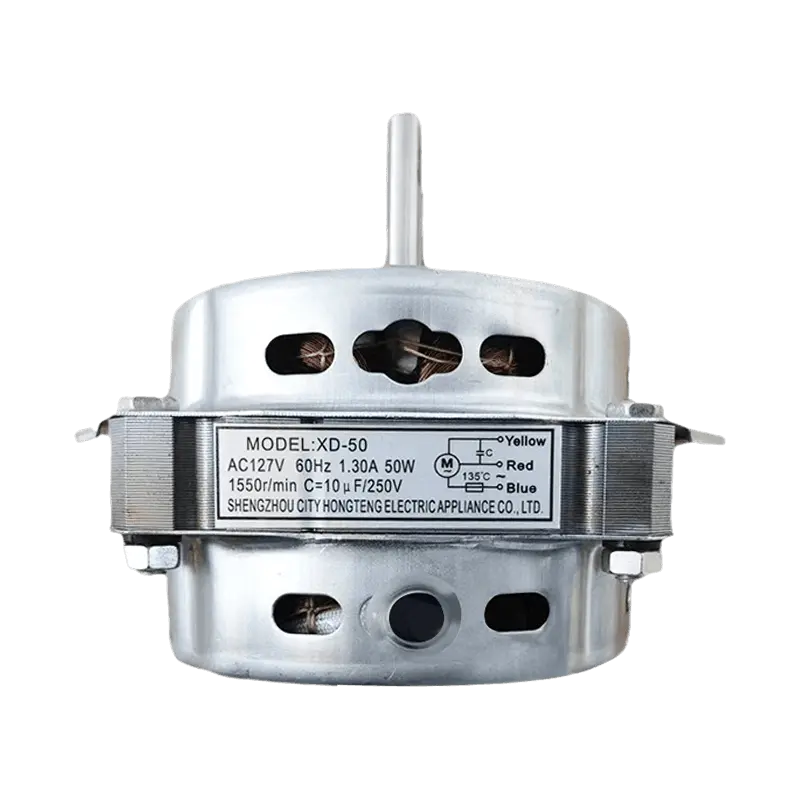
AC motors used in washing machines and spin dryers are built with precisely wound stator coils and balanced rotor assemblies, both of which are calibrated during manufacturing to minimize eccentric spinning. When the rotor's mass is distributed evenly around its central axis, the magnetic field generated during operation stays consistent, and the shaft rotates without the small wobbles that uneven rotors tend to produce. This precision is typically achieved through computer-controlled winding processes and dynamic balancing tests performed before the motor is installed into the appliance.
A washing machine motor's torque output needs to remain steady across a wide range of speeds, from the slow tumbling of the wash cycle to the rapid rotation of the spin cycle. AC induction motors achieve this through their winding geometry, which produces a rotating magnetic field that pulls the rotor along smoothly rather than in abrupt pulses. Consistent torque delivery can reduce mechanical noise and shaking by a measurable margin compared to motors with irregular torque curves, particularly during the transition between wash and spin phases when speed changes are most abrupt.
The motor shaft connects to the drum through a bearing assembly, and the alignment of this connection has a direct bearing on vibration levels. Sealed bearing units filled with lubricant maintain consistent rotational resistance over time, preventing the slight play that develops when bearings wear unevenly. Proper shaft alignment during assembly ensures the drum rotates on a true axis, so the load presented to the motor stays predictable rather than shifting unpredictably as components age.
The motor does not manage vibration control on its own. Counterweights attached to the drum housing, typically made from concrete or dense polymer composites, offset the shifting mass of wet laundry during rotation. Suspension springs and hydraulic or friction dampers absorb the residual movement that counterweights cannot fully cancel out. When these mechanical systems function properly, the motor experiences a more uniform load, which reduces the electrical and mechanical strain placed on its windings and bearings during each cycle.
Modern control boards often communicate with the motor to detect imbalance before the spin cycle reaches full speed. Sensors monitor drum movement, and if an imbalance is detected, the control system can pause, redistribute the load through a brief reverse rotation, or reduce spin speed to a safer level. This coordination between electronic sensing and motor response prevents the kind of sustained high-force vibration that would otherwise accelerate wear on internal components.
The materials used in AC motor construction affect both how much vibration the motor generates and how well it tolerates the vibration it does encounter. Stator cores are typically built from laminated silicon steel sheets rather than solid steel blocks, since lamination reduces energy loss and heat buildup, which in turn keeps internal components from expanding unevenly during long operating cycles. Copper windings, valued for their conductivity and resistance to fatigue, maintain stable electrical performance even after years of repeated heating and cooling.
Rotor shafts are commonly machined from hardened steel alloys that resist bending under repeated mechanical stress, while mounting brackets and housings are often reinforced with ribbed aluminum or composite structures to dampen resonance. The combination of these material choices means the motor assembly can absorb minor shocks and vibrations internally rather than transmitting them fully into the surrounding cabinet.
| Component | Typical Material | Functional Benefit |
|---|---|---|
| Stator core | Laminated silicon steel | Reduces heat and uneven expansion |
| Windings | Copper wire | Stable conductivity over time |
| Rotor shaft | Hardened steel alloy | Resists bending under load |
| Mounting housing | Ribbed aluminum or composite | Dampens resonance and shock |
Vibration control is relevant across a range of household laundry equipment beyond standard front-load washing machines. Compact spin dryers used in apartments and mobile living spaces rely on high-speed AC motors to extract water quickly, and because these units are often placed on lightweight flooring or countertops, minimizing vibration is especially important to prevent the unit from shifting or making excessive noise. Combination washer-dryer units, which house both washing and drying functions in a single drum, place additional demand on motor stability since the same motor assembly handles multiple speed profiles across a single cycle.
Laundromat and shared-building washing machines experience more frequent use than typical household units, so their motors and vibration-control systems are engineered to tolerate repeated high-load cycles throughout the day. In these settings, even modest reductions in vibration per cycle accumulate into a meaningful difference in wear over months of continuous operation, since the components are subjected to thousands of additional rotation cycles compared to a machine used only a few times per week.
Regular maintenance helps preserve the vibration-reducing benefits built into an AC motor system. Loading laundry evenly around the drum, rather than piling heavy items on one side, reduces the imbalance the motor has to counteract during each spin cycle. Checking that the appliance sits level on the floor, using adjustable feet if available, prevents the frame from introducing additional wobble that the motor and suspension were not designed to compensate for.
Periodic inspection of suspension springs and dampers for wear allows these components to continue absorbing residual vibration effectively, since a worn damper places more strain on the motor mounts than a functioning one. Keeping drainage paths clear also matters, as trapped water adds unexpected weight to the drum during spin cycles, creating imbalance that the motor and control system then have to manage. Attention to these details, combined with the motor's own balanced construction, contributes to steadier operation and a service life that extends well beyond appliances where vibration goes unmanaged.
Recommended Products

Contact Us
+86 0575 83078988
+86 13605855838
+86 17769850789
13605855838
No. 20, Zhiye Road, Changle Town, Shengzhou City, Shaoxing City, Zhejiang Province
Contact Us
 Custom Mini AC Motor Manufacturers