English
 中文简体
中文简体

Quick Product Search
Contact us to learn how we can use our expertise to bring you high-quality products.
2026-03-06
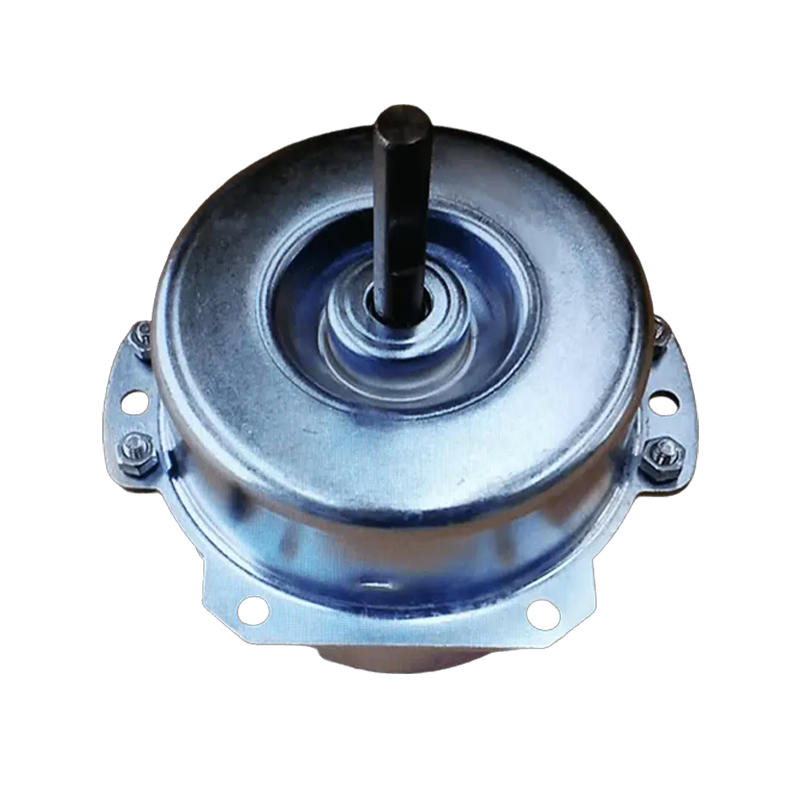
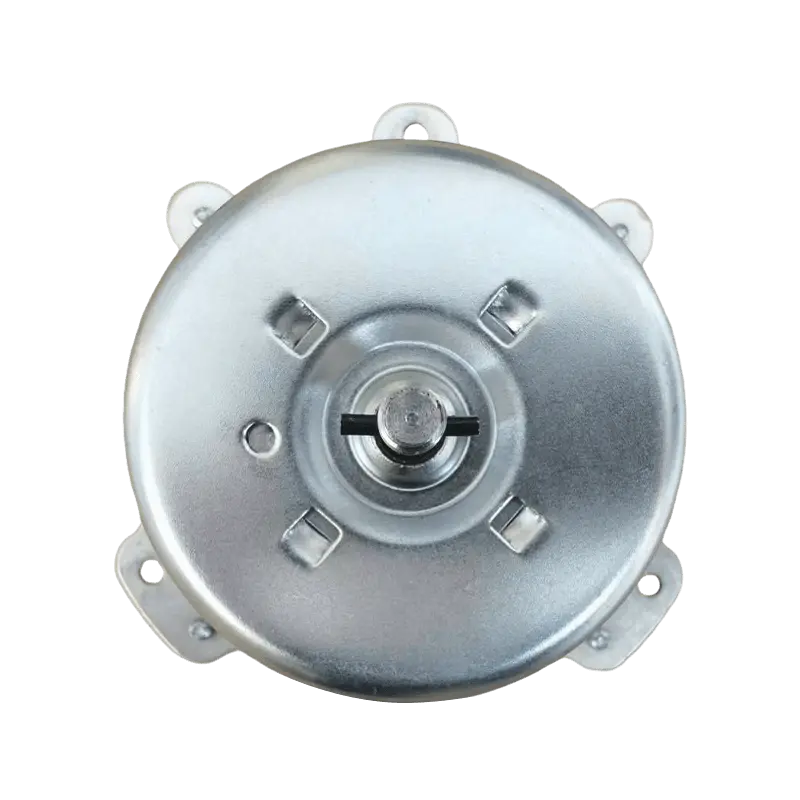
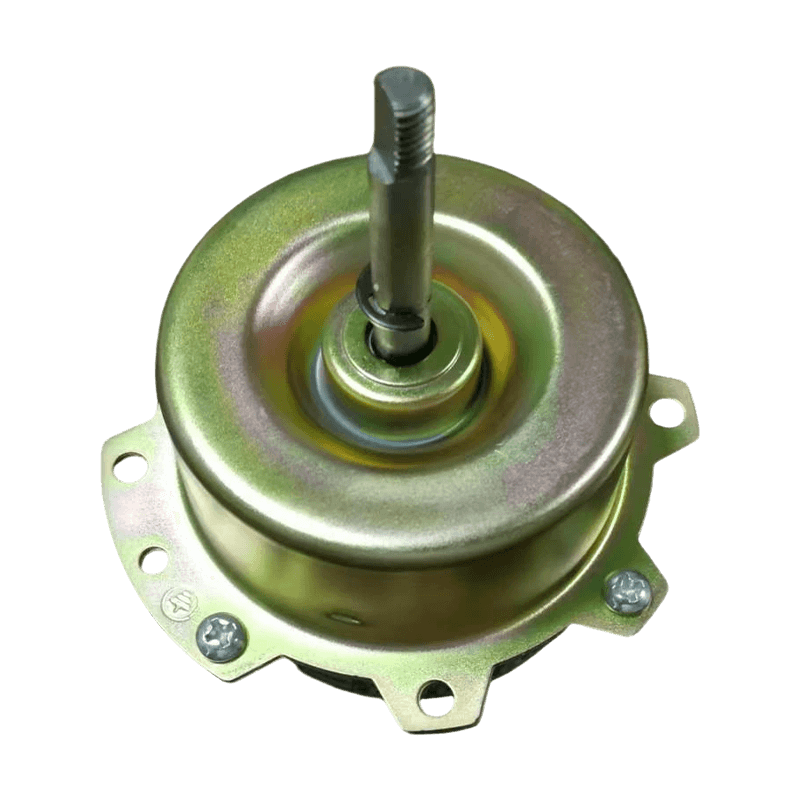
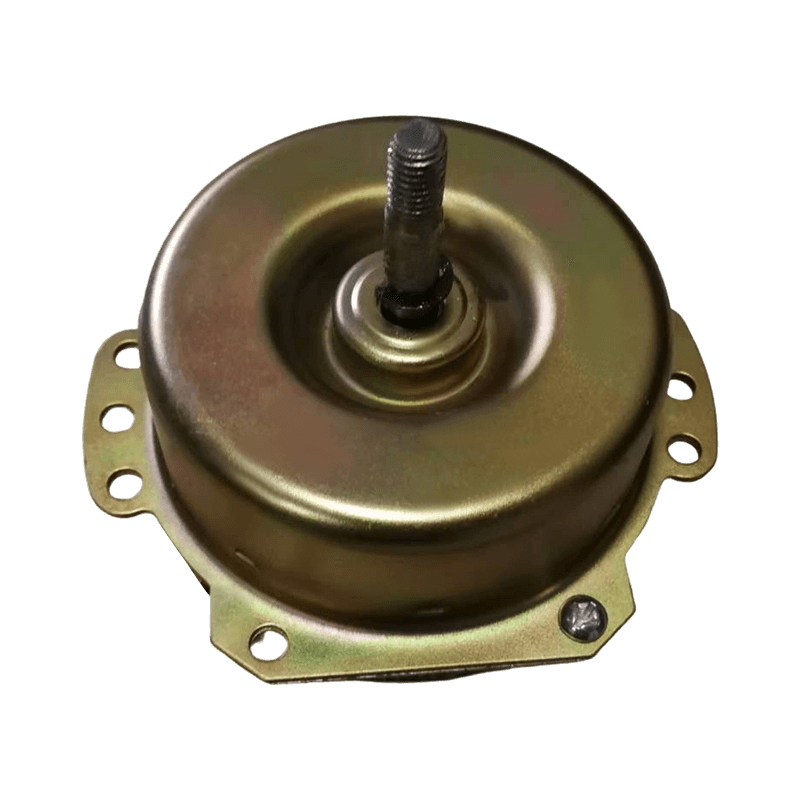
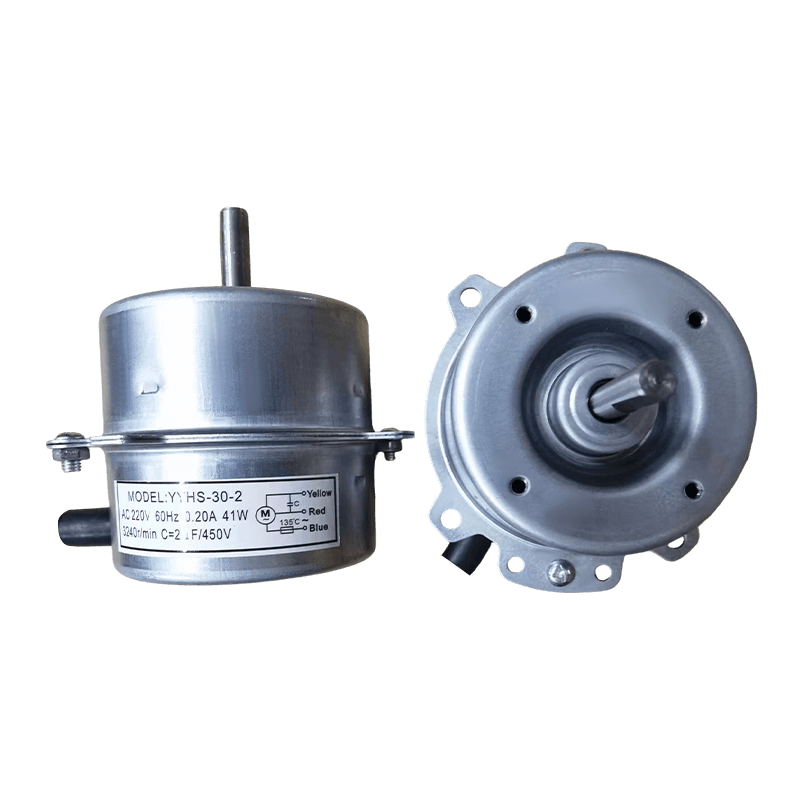
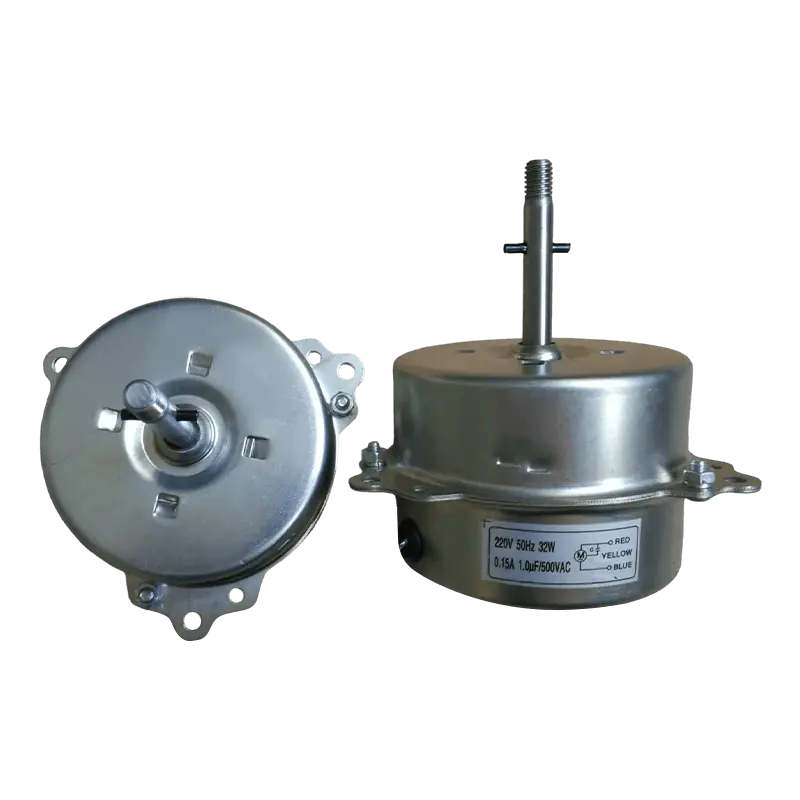
When selecting or designing a ventilation system, understanding the different types of Exhaust Fan AC Motor is crucial. Based on their starting methods and winding designs, AC motors exhibit significantly different efficiency, torque, and cost characteristics.
The following are the most common types of Exhaust Fan AC Motor used in ventilation:
This is the simplest structural form of an Exhaust Fan AC Motor. It creates a rotating magnetic field by placing a copper ring (shading coil) around a portion of each stator pole.
The PSC motor is the current industry standard for mid-to-high-end Exhaust Fan AC Motor applications. It uses a permanently connected run capacitor to improve efficiency and operational smoothness.
This type of Exhaust Fan AC Motor connects a high-capacity capacitor during startup to achieve high starting torque, then disconnects the capacitor via a switch once running.
| Indicator | Shaded Pole Motor | PSC Motor | CSIR Motor |
| Efficiency | 15% - 30% (Lower) | 50% - 70% (Mid-High) | 40% - 60% (Medium) |
| Starting Torque | Low (Suitable for light loads) | Medium | High (Suitable for heavy loads) |
| Power Factor | Lower | Near 1.0 (Excellent) | Lower |
| Noise Level | Moderate | Extremely Low (Smooth rotation) | Moderate (Switching sound) |
| Manufacturing Complexity | Minimal | Medium (Requires external capacitor) | High (Includes starting device) |
| Common Power Range | 1W - 50W | 20W - 500W+ | 100W - 1500W+ |
| Speed Control Ability | Poor (Usually fixed speed) | Good (Via voltage/multi-winding) | Poor |
Understanding the internal construction of an Exhaust Fan AC Motor helps in grasping how it maintains high efficiency under intense working conditions. AC motors work primarily based on Faraday’s Law of Electromagnetic Induction.
When AC power enters the stator windings of the Exhaust Fan AC Motor, a rotating magnetic field is formed. According to electromagnetic induction, this field induces a current in the rotor bars. The rotor current interacts with the magnetic field to produce electromagnetic force (Lorentz force), pushing the rotor to follow the rotation of the stator field, thereby driving the fan blades.
| Technical Specification | Sleeve Bearing | Ball Bearing |
| Working Principle | Shaft slides within a lubricated sleeve | Shaft is supported by rolling steel balls |
| Design Life | Approx. 20,000 - 30,000 hours | Approx. 50,000 - 80,000 hours |
| Friction Coefficient | Higher (Increases as oil dries) | Extremely low and stable |
| Orientation Limits | Usually restricted to horizontal | Supports horizontal, vertical, or any angle |
| Operational Noise | Very quiet initially, increases later | Consistently low noise |
| Temperature Resistance | Moderate; oil fails at high temps | Excellent; suitable for heat exhaust |
| Cost-Effectiveness | Low cost; suitable for consumer goods | Higher cost; suitable for 24/7 industrial use |
| Material Property | Pure Copper Winding | Aluminum/CCA Winding |
| Conductivity | 100% (Standard) | Approx. 60% - 70% |
| Heat Resistance | Extremely high; resists burnout | Lower; resistance increases rapidly with heat |
| Efficiency | Low loss; high energy efficiency | High loss; motor heats up easily |
| Mechanical Strength | Good toughness; vibration resistant | Brittle; prone to open-circuit failure |
| Motor Volume | Smaller volume for same power | Requires larger volume for heat dissipation |
Choosing the correct Exhaust Fan AC Motor involves more than just matching power; it requires scientific comparison based on ventilation needs, installation environment, and expected duty cycles.
The power of an Exhaust Fan AC Motor is usually expressed in Watts (W) or Horsepower (HP), and it must overcome the air resistance of the fan blades.
| Application | Recommended Power Range | Typical RPM | Suggested Bearing Type |
| Small Domestic Bathroom | 15W - 35W | 1000 - 1500 | Sleeve Bearing (Economic) |
| Commercial Kitchen Hood | 150W - 400W | 1500 - 2800 | Dual Ball Bearing (Durable) |
| Factory/Warehouse Exhaust | 0.5HP - 2HP+ | 800 - 1700 | Heavy-duty Ball Bearing (Industrial) |
| Electronic Cooling | 5W - 20W | 2500 - 3500 | Sleeve or Hydraulic Bearing |
| Parameter | Description and Impact |
| Rated Voltage | Must match (e.g., AC 110V or 220V). High voltage burns windings; low voltage fails to start. |
| Frequency | 50Hz or 60Hz. Mismatched frequency causes speed deviation (approx. 20%) and overheating. |
| Insulation Class | Class B (130°C) is standard; Class F (155°C) is for high-temp industrial use. |
| IP Rating | IP44 for splash resistance; IP55/IP66 for dust and water resistance in industrial sites. |
Proper installation ensures safety and efficiency. Always ensure the power is completely disconnected before handling an Exhaust Fan AC Motor.
| Wiring Type | Cable Count | Features | Application |
| Single Speed | 3 Wires (L, N, G) | Simplest; runs at full speed. | Basic industrial or bathroom fans. |
| Multi-Speed | 4+ Wires | Changes speed via winding taps. | Range hoods; office ventilation. |
| Reversible | 4-5 Wires | Changes direction via phase swap. | Window fans with intake/exhaust modes. |
| Installation Focus | Technical Requirement | Potential Consequence |
| Alignment | Deviation < 0.05mm | Vibration, bearing failure, high noise. |
| Angle | Vertical or Horizontal (Match bearing) | Sleeve bearings fail quickly if mounted vertically. |
| Tightening Torque | Use torque wrench per bolt specs | Loose parts cause displacement; over-tightening cracks end shields. |
| Cooling Space | Clear air intake at the motor rear | Poor ventilation leads to rapid temperature rise. |
Regular maintenance significantly reduces the failure rate of an Exhaust Fan AC Motor.
| Problem | Possible Cause | Solution |
| Motor won't start, no sound | No power or internal thermal fuse blown | Check circuit; replace motor if fuse is non-resettable. |
| Motor hums but won't turn | Failed capacitor or jammed blades | Replace capacitor; clear obstructions. |
| Excessive noise | Worn bearings or unbalanced blades | Replace bearings; tighten or replace blades. |
| Motor slow and overheating | Shorted windings or low voltage | Measure voltage; replace motor if voltage is normal. |

Contact Us
+86 0575 83078988
+86 13605855838
+86 17769850789
13605855838
No. 20, Zhiye Road, Changle Town, Shengzhou City, Shaoxing City, Zhejiang Province
Contact Us
 Custom Mini AC Motor Manufacturers