English
 中文简体
中文简体

Quick Product Search
Contact us to learn how we can use our expertise to bring you high-quality products.
2026-05-28
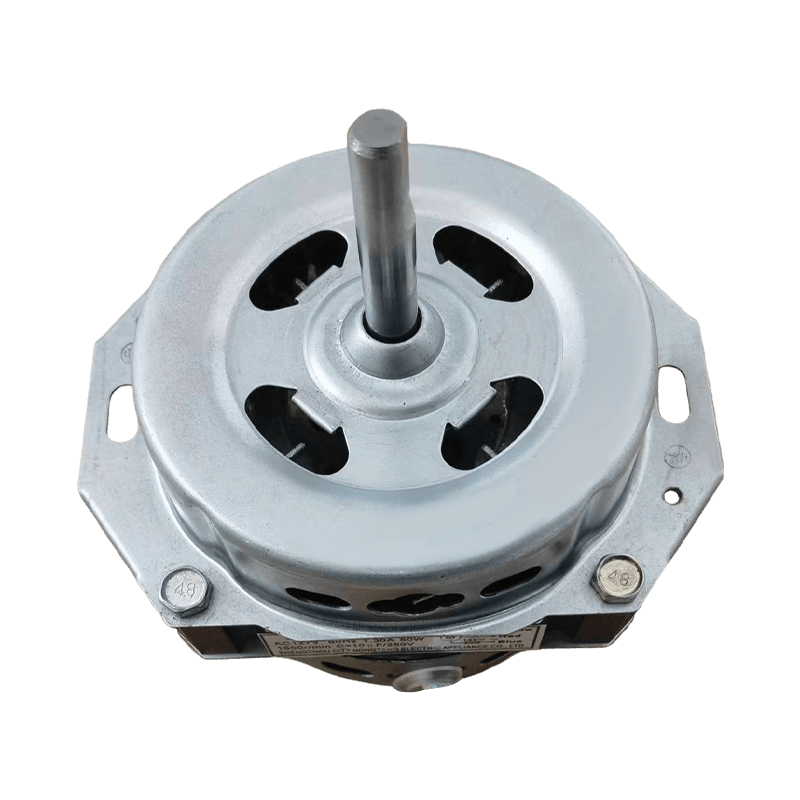
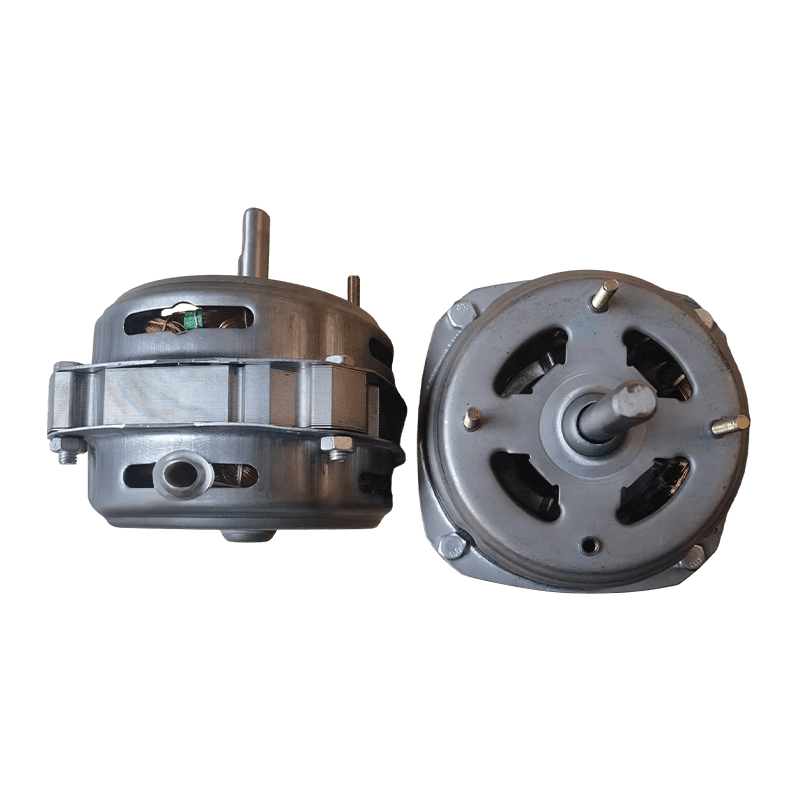
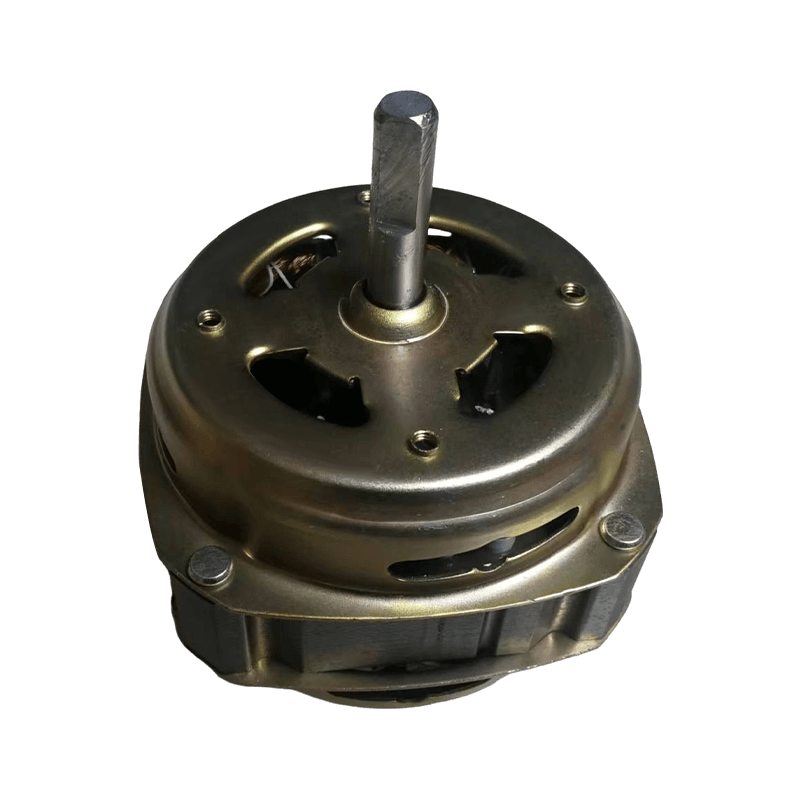
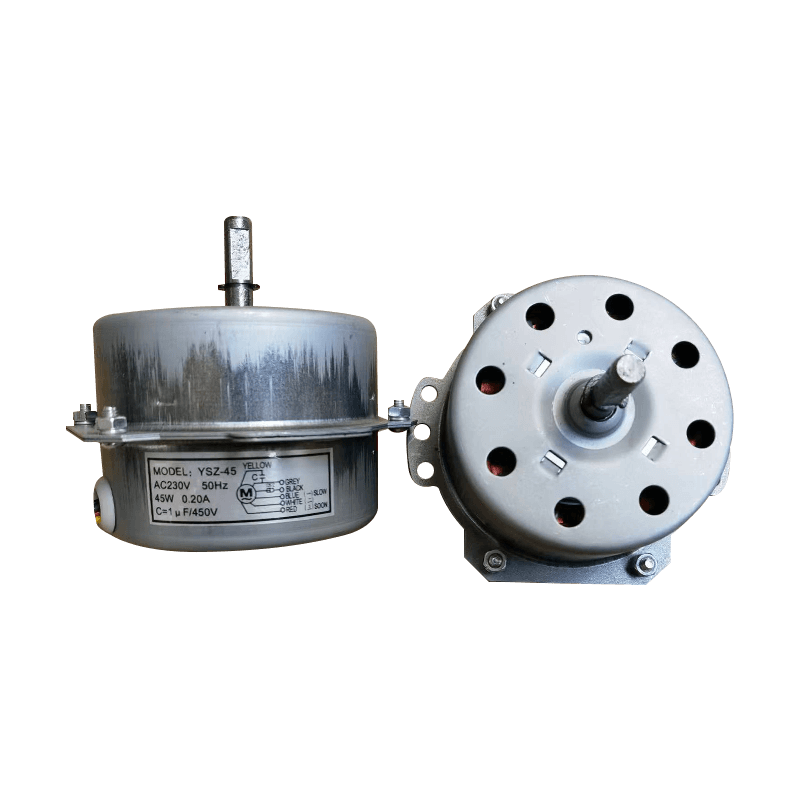
As summer energy bills climb and urban noise pollution intensifies, the AC motor at the heart of a tower fan has become the defining engineering variable separating products that merely move air from those that do so efficiently, quietly, and reliably. Advances in stator winding geometry, magnetic-circuit design, and thermal management have produced a new generation of high-efficiency silent AC motors that reduce standby and operating consumption by up to 40 percent while holding acoustic output below the threshold of perceptibility -- redefining what summer cooling can reasonably demand of the household electricity supply.
Tower fans occupy a unique position in the cooling appliance market: they are expected to operate for eight to twelve hours daily throughout a three-to-four-month summer season, placing cumulative energy draw in a range that makes even small efficiency differences meaningful at the annual electricity bill level. The AC induction motor -- still the dominant drive technology in mainstream tower fans -- converts grid power into rotational shaft energy that drives a cross-flow impeller, and the efficiency of that conversion determines both running cost and heat generated within the motor housing.
Unlike the compressor motor in an air conditioner, the tower fan motor operates at relatively low torque but demands consistency of speed across a range of load conditions. Rotor slip, iron losses in the stator laminations, copper resistive losses in the windings, and friction at the bearing surfaces all represent energy pathways that produce heat rather than airflow. Engineering these loss mechanisms downward simultaneously reduces energy consumption and thermal stress -- two outcomes that directly extend motor service life while reducing operating cost.
Iron losses -- the sum of hysteresis and eddy-current losses in the stator core -- account for a substantial portion of no-load power consumption in conventional AC motors. Switching from standard cold-rolled grain-oriented steel to high-silicon non-oriented electrical steel with silicon content of 3 to 3.5 percent reduces hysteresis losses by lowering the area of the B-H magnetisation loop. Thinner lamination thickness -- 0.35 mm rather than the 0.5 mm common in lower-cost motors -- cuts eddy-current losses by approximately the square of the thickness ratio, delivering a combined iron-loss reduction of 20 to 30 percent without altering external dimensions.
Copper resistive loss (I2R loss) is proportional to winding resistance, which is inversely related to the cross-sectional area of copper conductor packed into each stator slot. Automated needle-winding machines achieve slot fill factors above 75 percent compared to the 55 to 60 percent typical of hand-wound or conventionally inserted coils, reducing winding resistance and the associated heat generation. Thicker insulation systems rated at 180 degrees Celsius Class H allow motors to operate at higher winding temperatures without degradation, providing a thermal safety margin that translates directly into longer insulation service life.
Single-phase AC induction motors used in tower fans rely on a run capacitor to create the phase-split needed for continuous rotation. An undersized or degraded capacitor forces the motor to draw reactive current from the supply, wasting grid energy without contributing to shaft output. Precision capacitor sizing -- matched to the exact winding impedance of the motor at rated speed and load -- improves power factor from a typical 0.65 to values above 0.90, directly reducing the apparent power drawn from the household circuit and improving the efficiency rating that appears on energy labels.
Acoustic performance in a tower fan is governed by three distinct noise sources: aerodynamic noise from the cross-flow impeller and its interaction with housing geometry, mechanical noise transmitted through the motor structure and support frame, and electromagnetic noise produced by the motor's alternating magnetic field. High-efficiency silent motor designs address all three pathways systematically.
The 50 Hz alternating magnetic field in the stator creates magnetostrictive deformation of the lamination stack at 100 Hz and its harmonics -- a characteristic hum that is immediately identifiable in low-quality motors. Two engineering approaches suppress this. First, stress-relief annealing of the lamination stack after punching removes the residual mechanical stress introduced by the stamping process that amplifies magnetostrictive response. Second, the stator core is bonded rather than bolted: adhesive-bonded laminations eliminate the micro-vibration between adjacent plates that conventional through-bolt clamping fails to prevent at low clamping force.
Ball bearings are the dominant source of broadband mechanical noise in AC motors. Deep-groove ball bearings with C3 radial clearance -- meaning slightly wider internal clearance than standard -- accommodate thermal expansion of the shaft during operation without developing the increased contact stress that generates audible noise in tighter-clearance bearings. Grease filling with low-viscosity polyurea-based lubricant reduces churning losses and broadband noise compared to lithium-based greases. Controlled axial pre-loading via spring washers eliminates bearing rattle at the low torque levels typical of fan operation, where unloaded bearings are otherwise free to produce intermittent contact noise.
Motor vibration transmitted through the support frame to the tower fan housing acts as a radiating surface, amplifying what would otherwise be inaudible structural motion into airborne sound. High-efficiency silent motor assemblies use rubber-isolated motor mounts with durometer hardness tuned to isolate the primary vibration frequencies -- typically 50, 100, and 150 Hz -- from the plastic housing panels. Internal constrained-layer damping applied to the back panel of the housing adds hysteretic energy absorption at frequencies where the panel resonance would otherwise amplify transmitted vibration.
| Motor Type | Typical Efficiency | Noise Profile | Cost Position | Best Application |
|---|---|---|---|---|
| Shaded-pole AC induction | 15 to 25% | High hum; 42 to 52 dB(A) | Low | Budget entry-level fans |
| Standard capacitor-run AC | 35 to 50% | Moderate; 36 to 46 dB(A) | Mid | Mid-range residential fans |
| Optimised capacitor-run AC | 55 to 68% | Low; 28 to 38 dB(A) | Mid-premium | Energy-rated premium fans |
| EC (electronically commutated) AC/DC hybrid | 75 to 90% | Very low; 25 to 33 dB(A) | Premium | Smart fans; continuous operation |
| BLDC with AC-DC converter | 80 to 93% | Near-silent; 22 to 30 dB(A) | High | Sleep-mode optimised, premium segment |
The optimised capacitor-run AC motor occupies the performance-value optimum for the mainstream market: it requires no complex power electronics, is compatible with existing speed-control triac circuits, and delivers efficiency and noise performance that satisfies both energy-label requirements and consumer acoustic expectations. The electronically commutated and brushless DC variants offer further improvement but introduce converter cost and electromagnetic interference considerations that require additional filtering and certification investment.
Rotor conductors arranged at a slight angle to the shaft axis reduce the pulsating magnetic force between rotor and stator teeth, eliminating the dominant slot-harmonic noise component without measurable impact on output torque.
Spreading each phase winding across multiple slots produces a more sinusoidal magnetomotive force distribution, reducing harmonic content in the air-gap flux and the corresponding electromagnetic noise and vibration at harmonic frequencies.
Encapsulating the stator winding in thermally conductive epoxy resin eliminates air pockets that act as thermal insulators, reducing winding hotspot temperature by 15 to 25 degrees Celsius and extending insulation service life by a factor of two to four at equivalent load.
Triac-based phase-angle control or transformer tap-switching allows the motor to operate at reduced voltage on low-speed settings, cutting power consumption to 15 to 25 percent of rated value while maintaining smooth rotation without the cogging that degrades acoustic performance at low speed.
Co-engineering the motor's speed-torque characteristic with the impeller's resistance curve ensures the operating point falls at the peak of the efficiency curve, avoiding the partial-load efficiency penalty that afflicts motors sized for peak demand but run continuously at part load.
Bimetallic thermal cutouts embedded directly in the stator winding interrupt motor current if winding temperature exceeds the design limit, preventing insulation degradation during abnormal operating conditions such as blocked airflow or sustained high-speed operation in elevated ambient temperatures.
The practical energy-saving benefit of a high-efficiency silent AC motor can be illustrated through a comparison of seasonal electricity consumption for a representative tower fan application: eight hours of daily operation across a ninety-day summer period, covering sleep-mode and daytime-use scenarios across different speed settings.
The 12.8 kWh seasonal difference -- approximately 38 percent reduction -- represents a direct electricity cost saving and a corresponding reduction in grid carbon emissions. At European residential electricity tariffs, this translates to a meaningful annual saving per household fan. Scaled across the tens of millions of tower fans sold globally each summer, the aggregate efficiency improvement from widespread adoption of optimised AC motor designs represents a statistically significant demand reduction on national grid infrastructure during the peak summer cooling period.
Regulatory pressure is accelerating motor efficiency improvements beyond what market competition alone would produce. Key developments include:
The three performance objectives -- energy efficiency, acoustic silence, and product longevity -- converge in the thermal management of the motor. Every watt of energy lost to iron, copper, and friction losses appears as heat within the motor housing. In a tower fan, this heat must be dissipated through the motor casing and into the airstream passing through the impeller, because the enclosed housing geometry of most tower fans provides limited natural convection cooling.
Excessive motor temperature degrades bearing lubricant viscosity, accelerating wear and increasing rolling-element noise. It softens the polymer motor housing components that maintain bearing alignment, progressively worsening shaft runout and the aerodynamic noise that results from impeller tip clearance variation. Most critically, it degrades electrical insulation through the Arrhenius relationship: every 10 degrees Celsius rise in winding temperature approximately halves insulation service life. A motor that runs 20 degrees Celsius cooler because of improved efficiency does not merely consume less energy -- it lasts four times longer before insulation failure, delivers consistent acoustic performance throughout its service life, and reaches the consumer through fewer warranty returns.
For consumers evaluating tower fan purchases during the summer season, the motor specification is rarely disclosed in marketing materials, making indirect indicators essential for identifying genuinely high-efficiency, low-noise products.
High-efficiency silent tower fan AC motors represent a convergence of electromagnetic design, precision manufacturing, and acoustic engineering that addresses the central tension of summer cooling: the need to move significant volumes of air continuously, economically, and without disturbing sleep or concentration. The incremental engineering investment required to achieve IE3-class efficiency with sub-30 dB(A) acoustic output is recoverable within a single cooling season through electricity savings alone, making the technology an economically self-justifying upgrade rather than a premium feature.
As energy labelling regulations tighten globally and consumers become more attuned to the relationship between product specifications and household running costs, the AC motor inside the tower fan will increasingly be recognised as the determinant of summer energy performance. Manufacturers who invest in stator lamination quality, precision winding, bearing selection, and structural vibration isolation will hold a durable competitive advantage -- not because their products are quieter or more efficient in isolation, but because they address both objectives simultaneously, delivering the combination of low energy cost and undisturbed sleep that defines the ideal summer cooling experience.
Recommended Products

Contact Us
+86 0575 83078988
+86 13605855838
+86 17769850789
13605855838
No. 20, Zhiye Road, Changle Town, Shengzhou City, Shaoxing City, Zhejiang Province
Contact Us
 Custom Mini AC Motor Manufacturers