English
 中文简体

Quick Product Search
Contact us to learn how we can use our expertise to bring you high-quality products.
2026-10-16
Ceiling fans look like simple products: a motor, three or four blades, and a housing. In practice, the motor has one of the toughest jobs in the home. It has to start a heavy load at low speed, hold a steady RPM through years of daily use, and stay quiet enough that nobody notices it running. The ceiling fan electric motor, more than the blades or the finish, is usually what decides whether a fan feels solid or cheap.
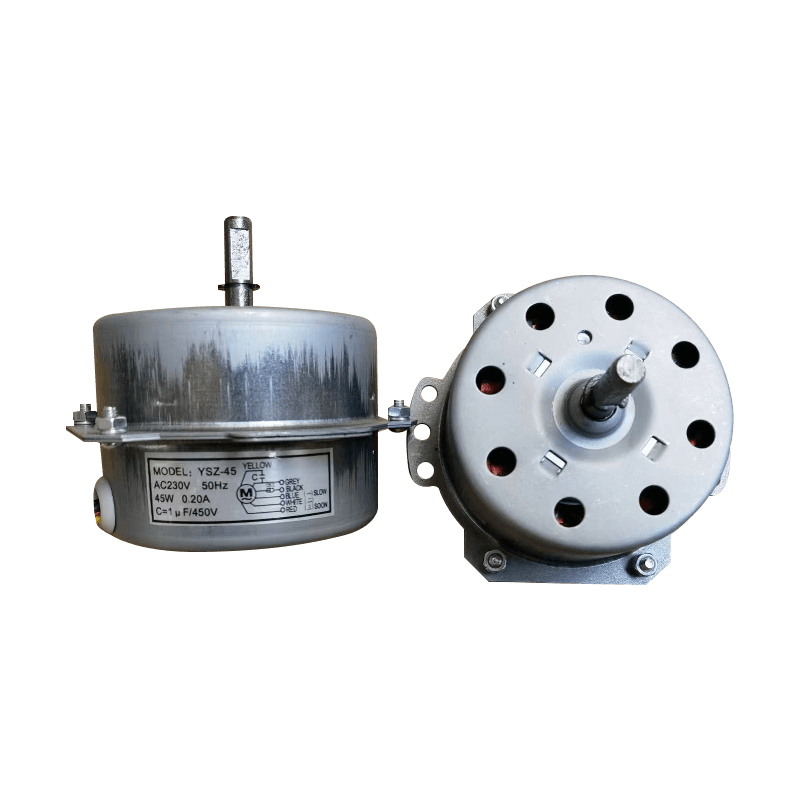
We have spent more than twenty years designing and building small AC motors for household appliances, including fan, ventilation and exhaust motors supplied to fan makers across Asia, the Middle East, the Americas and Europe. This article covers how a ceiling fan motor works, how the main designs compare, and what to check before you specify one.
An electric motor converts electrical energy into mechanical energy. Inside a ceiling fan motor, current flows through the stator windings and creates a rotating magnetic field. That field drags the rotor around, the rotor turns the shaft, and the shaft turns the blade hub. Everything else in the fan, whether it is a pull chain, a wall control or a remote receiver, only decides how much current reaches the windings and how fast the field rotates.
For this particular application, a motor has to satisfy a fairly specific list of demands:
Four motor families cover almost every ceiling fan on the market today.
Shaded-pole motors are the simplest and cheapest option. A copper shading ring on each pole creates a weak rotating field, enough to start a small, light fan. They are robust and inexpensive, but efficiency is low and starting torque is modest, so they usually appear in budget fans, bathroom ventilators and small circulation fans.
Permanent split capacitor (PSC) motors add a run capacitor in series with a second winding. The capacitor shifts the phase of the current and produces a stronger rotating field. PSC designs are the workhorse of ordinary AC ceiling fans: reasonable efficiency, good torque, low cost, and straightforward three-speed control through tapped windings.
Brushless DC motors, sometimes called ECM motors, use permanent magnets in the rotor and an electronic driver instead of a capacitor. They are the most efficient option by a wide margin, run smoothly across a very wide speed range, and pair naturally with remote controls and smart home systems. The trade-off is a higher cost for both the motor and its electronics.
Standard induction motors with external voltage control still appear in some older or heavy-duty fans. They work, but reducing voltage to slow an induction motor also reduces its torque, which is why tapped windings and capacitor steps are preferred.
| Motor type | Speed control | Noise and vibration | Efficiency | Typical use |
|---|---|---|---|---|
| Shaded pole | Tapped winding or choke | Higher | Low | Small budget fans, ventilators |
| PSC induction | Capacitor plus speed taps | Moderate | Moderate | Most AC ceiling fans |
| Brushless DC | Electronic driver | Low | High | Premium and smart fans |
| Induction with voltage control | Triac or voltage reduction | Moderate, hum possible | Moderate | Older or heavy-duty fans |
If you would like a broader view of how AC motors are applied across household appliances, from fan motors to washing machine and dryer motors, our guide to home appliance AC motor types and uses covers the same principles in more depth.
For smaller fans and ventilation products, a carefully built shaded-pole design is still a sensible choice when cost matters more than efficiency.
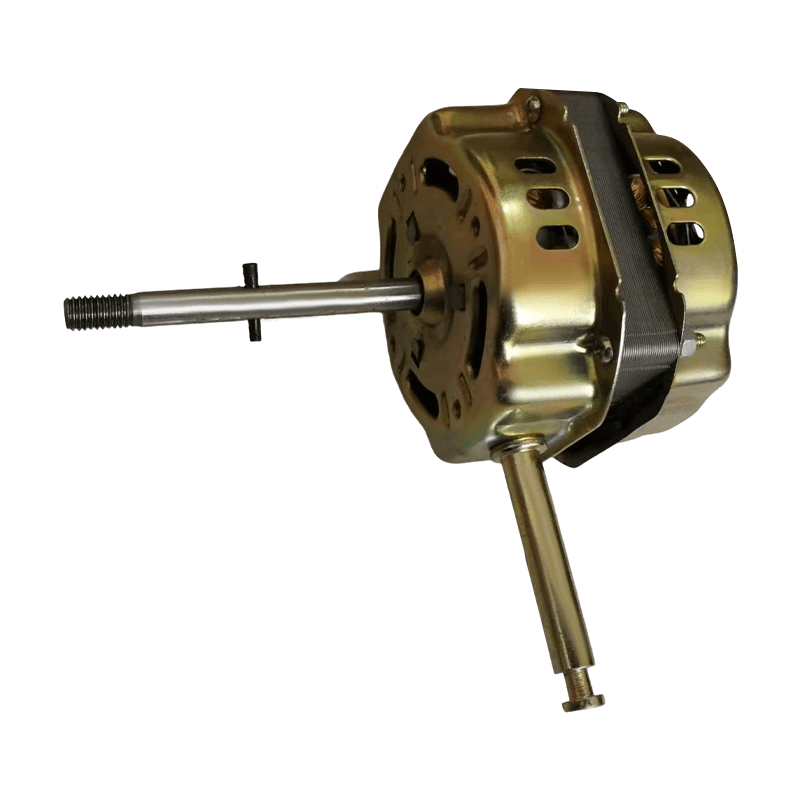
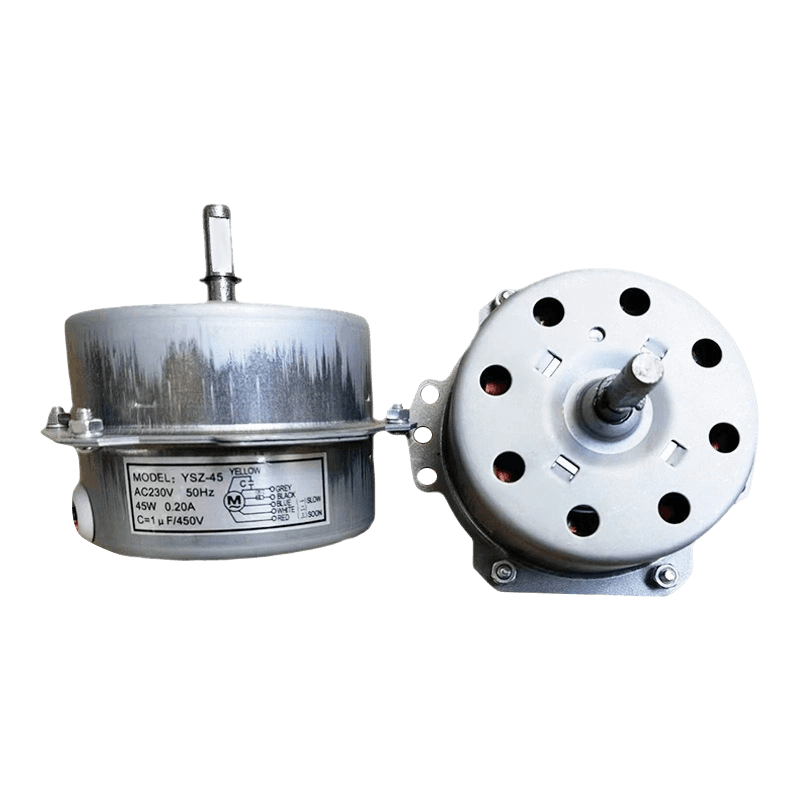
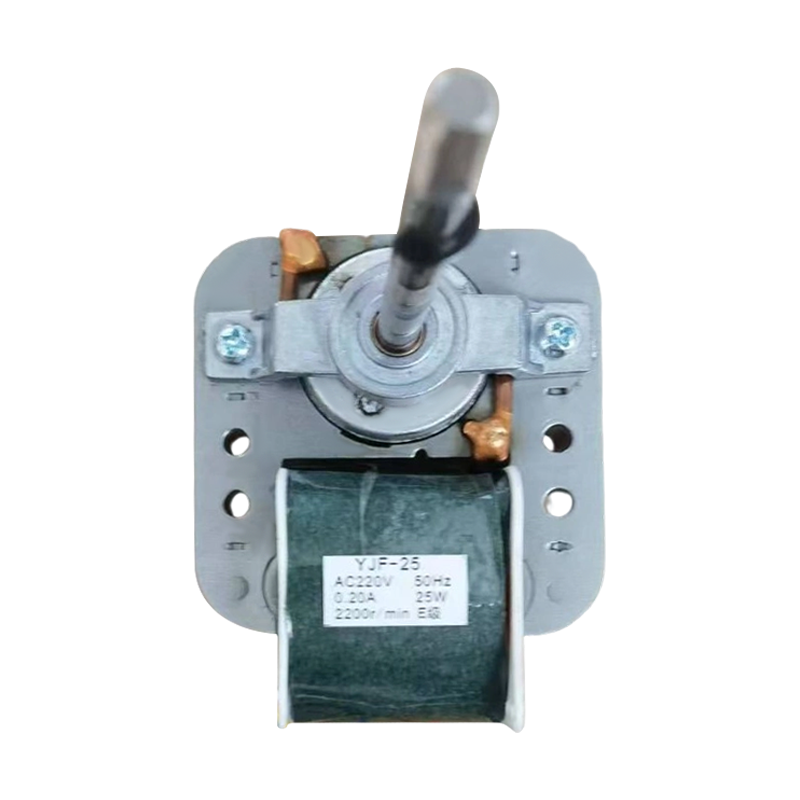 YJF-25 Three-Speed Low-Noise Shaded-Pole Motor for Small FansA compact shaded-pole AC motor with three-speed adjustment, suited to small circulation, neck, and handheld fans where quiet, economical airflow matters.View Product →
AC ceiling fans rarely vary speed with a variable resistor. Instead, the stator carries several speed taps, and the pull chain or switch selects how much of the winding is energised. This keeps torque reasonably steady at each step and avoids the overheating that comes with simple voltage reduction. Where a wall control is used, a fan-rated stepped controller is the safe choice. Ordinary lamp dimmers chop the waveform, which produces hum, extra heat and, in the worst case, a failed capacitor.
Direction matters too. A reversible fan runs one way in summer to push air down and the other way in winter to circulate warm air along the ceiling. Reversal is done electrically by swapping the connection between the start and run windings, so it has to be designed into the motor from the beginning.
A good example of this kind of design is a bidirectional, three-speed fan motor built for the North American market, where one fan is expected to run quietly in both directions on a 120 V, 60 Hz supply.
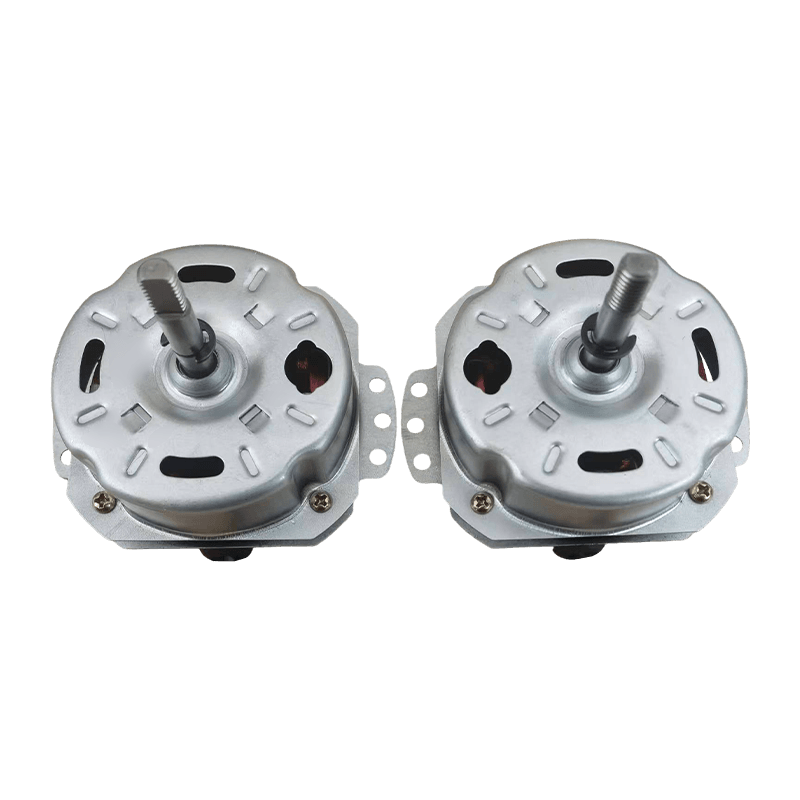
 M-WD52/CZ310R Bidirectional Three-Speed American Fan MotorA bidirectional three-speed fan motor for North American 120 V, 60 Hz systems, offering forward/reverse airflow and quiet copper-wound operation for home or industrial use.View Product →
Two motors can share the same power rating and behave completely differently in a bedroom, because much of the difference sits in the small details.
Bearings come first. Sleeve bearings are quiet when new and cheap to make, but they wear faster and cannot take much axial load. Ball bearings cost more, run slightly louder at first, and last far longer, which is why they are standard in fans expected to run for hours every day.
Windings come second. Pure copper wire carries current with lower resistance than aluminium, so the motor runs cooler and holds its speed better. Insulation class and varnish quality decide how much heat the winding can survive before the insulation breaks down.
Balance and concentricity come third. A slightly bent shaft or an unbalanced rotor turns a quiet motor into a vibrating one, no matter how good the electrical design is.
Ceiling-mounted ventilation is a good test of all three points, because the motor sits above the room all day and any noise is amplified by the ceiling structure.
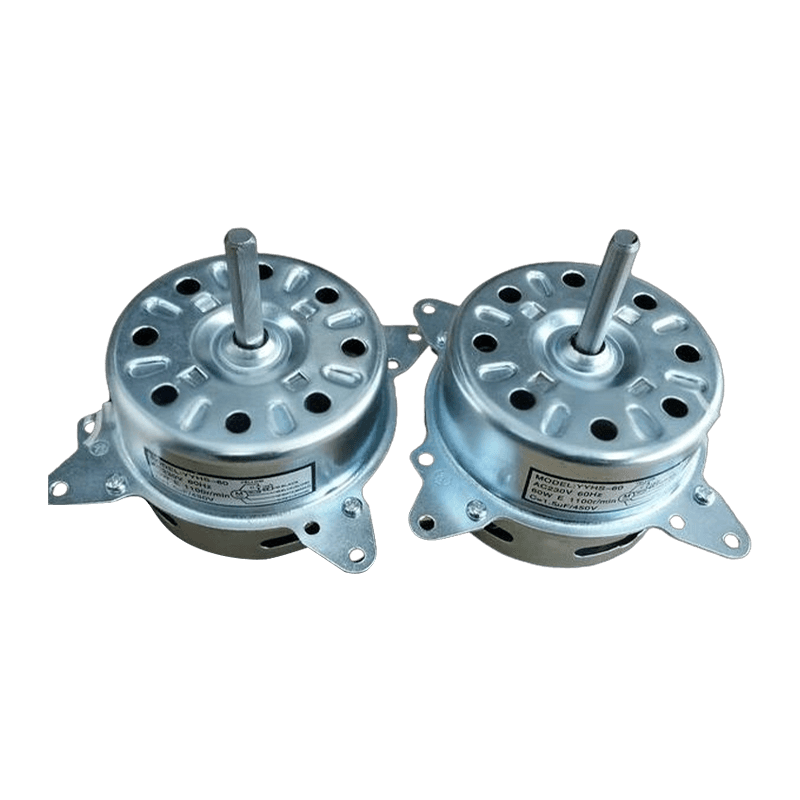
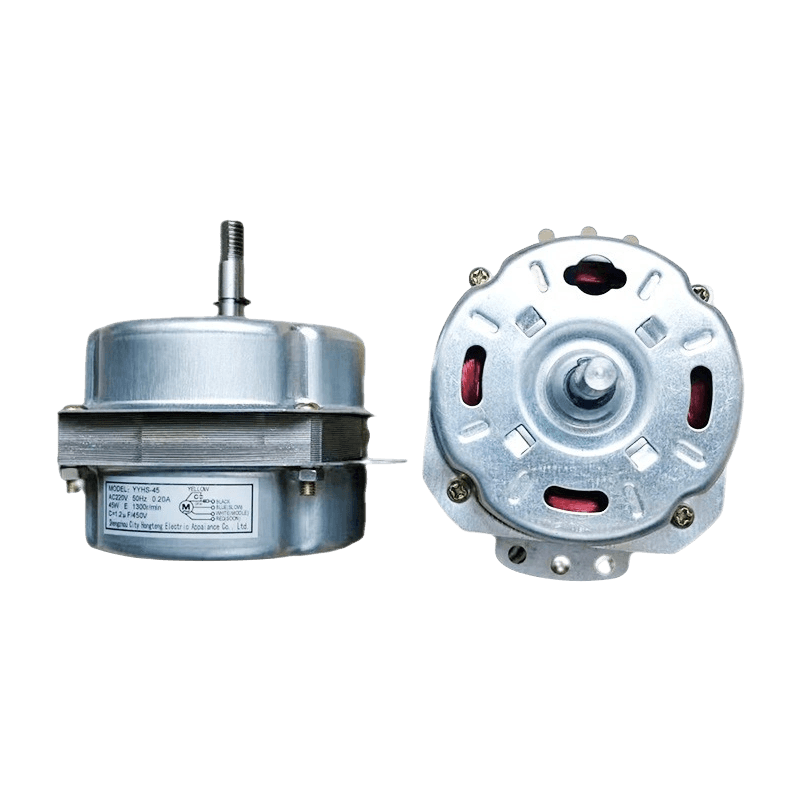 YYHS-30 Low-Noise Bidirectional Ball Motor for Ceiling VentilationA bidirectional ceiling-ventilator motor with ball bearings and full copper windings, designed for quieter bathroom and kitchen exhaust where ceiling-mounted noise is amplified.View Product →
If you are choosing a motor for a new fan, working through these steps in order saves a great deal of sampling time.
This part of the work is what we know best. Our factory in Zhejiang produces multi-speed fan motors on our own equipment, with an in-house engineering team that adjusts windings, capacitors and bearings to suit each customer's fan design, and we build motors for different voltages and frequencies rather than forcing one design onto every market.
No. Standard lamp dimmers are designed for resistive loads. A fan-rated stepped control or a capacitor-based controller is the correct choice, since a dimmer will usually cause hum and can damage the capacitor.
Yes. Synchronous speed depends on frequency, so a motor wound for 60 Hz will run roughly twenty percent faster on the same voltage at 50 Hz, and the capacitor has to be matched as well. Motors built for one grid rarely perform correctly on the other.
A ceiling fan electric motor is a small component with an outsized effect on how a fan feels, sounds and lasts. Get the type, the windings, the bearings and the control method right at the design stage, and the rest of the fan becomes much easier to sell.
If you are working on a new fan model or looking for a second source for an existing one, tell us the voltage, frequency, blade set and target speeds, and we will suggest a motor that genuinely fits rather than one that is merely close.
Recommended Products

Contact Us
+86 0575 83078988
+86 13605855838
+86 17769850789
13605855838
No. 20, Zhiye Road, Changle Town, Shengzhou City, Shaoxing City, Zhejiang Province
Contact Us
 Custom Mini AC Motor Manufacturers