English
 中文简体

Quick Product Search
Contact us to learn how we can use our expertise to bring you high-quality products.
2026-10-09
Search for a BLDC motor for a ventilator and you will quickly notice two very different conversations happening at once. One is about medical ventilators, the critical-care machines that breathe for a patient. The other is about ventilation equipment: exhaust fans, ceiling ventilators, bathroom heaters and air movers that keep homes and buildings fresh. Both use brushless DC motors, and both need quiet, reliable operation. But the requirements behind them are not the same, and treating them as one category is a fast way to specify the wrong motor.
We have spent more than two decades designing and manufacturing small electric motors for household appliances, including ventilation fans, exhaust fans and air purifiers. That work has taught us what actually matters when a motor has to run for years inside someone's home or a hospital room. Below we share what we have learned about BLDC motors in ventilator applications, and where a well-built AC motor is still the smarter choice.
The word "ventilator" describes both the patient-facing machine and the airflow device mounted in a wall or ceiling. Engineers searching for a ventilator motor usually belong to one camp or the other, and the duty profile they need looks quite different.
In a medical ventilator, the blower motor sits inside a control loop. It has to build pressure, deliver a precise volume of air, and then follow the patient's own breathing rhythm, sometimes dozens of times per minute, for days on end. The typical demands look like this:
In building and appliance ventilation, the job is simpler but no less demanding in its own way. An exhaust fan or ceiling ventilator may run continuously for years, often in humid, dusty or greasy air. Here the priorities shift toward cost, mains-voltage simplicity, bearing life and noise at a single operating point rather than dynamic control. A fan that whistles at night will generate complaints just as quickly as a noisy ventilator in a ward.
Brushless DC motors have become the default choice for modern ventilator designs for several practical reasons.
Brushed motors fail first at the brushes and commutator. A BLDC motor replaces that mechanical contact with electronic commutation, so the only parts that genuinely wear are the bearings. For equipment that runs continuously, that difference alone can move expected service life from a few thousand hours into tens of thousands, which matters a great deal when the motor is buried inside a sealed enclosure.
Removing brush friction also removes a whole band of high-frequency noise. Combined with a well-balanced rotor and sinusoidal drive, a BLDC motor can run smoothly enough that the dominant sound in the finished product is airflow rather than the motor itself. In a hospital room or a bedroom, that is often the deciding factor.
BLDC efficiency stays relatively flat across the speed range. An AC shaded-pole motor, by contrast, is at its best only near its design point and slips badly when you try to slow it down. For battery-backed transport ventilators, or for appliances chasing energy labels, this is where brushless designs pay for themselves.
Because speed and torque can be commanded electronically, a BLDC motor can be tied into a pressure or flow sensor and adjusted in real time. That is what allows a modern ventilator to detect a patient's effort and assist rather than fight it. The same control loop gives gentler starting, softer stops and the ability to hold a constant airflow as filters load up with dust.
Brush arcing is a genuine hazard where oxygen concentration is elevated. A brushless motor removes that ignition source entirely, and with appropriate winding insulation, sealed bearings and compatible lubricants, it can be built to operate safely in the gas path.
The anatomy is straightforward. A permanent-magnet rotor spins inside a wound stator, and an electronic drive switches the stator phases in step with rotor position. Position comes either from Hall sensors or, in sensorless designs, from back-EMF measurement. The drive board, built around a microcontroller and power stage, then translates a speed or pressure command into the switching pattern that produces the required torque.
In a ventilator blower, that command usually comes from a pressure or flow sensor sitting downstream of the impeller. The controller compares the measured value with the target and adjusts the motor speed continuously, which is how a machine can deliver a stable tidal volume even as the patient's lungs change. Good designs also add soft-start ramps, over-current protection, thermal monitoring and a defined behaviour on power loss. The drive electronics are the part most likely to be underestimated: they need clean power, sensible filtering and enough thermal headroom to survive in a warm enclosure.
When you compare ventilator motor options, it helps to line them up against the same set of parameters rather than reading data sheets one at a time.
| Parameter | What to look for | Why it matters |
|---|---|---|
| Speed range | Wide, with fine control steps | Sets the turndown from low flow to peak demand |
| Rated and peak torque | Matched to the impeller curve | Prevents stalling during pressure spikes |
| Bearing type | Sealed ball bearings for high speed | Drives noise level and service life |
| Noise and vibration | Measured at the real operating point | Directly affects patient and user comfort |
| Voltage and interface | 12, 24 or 48 V DC with PWM, UART or I2C | Determines compatibility with your control board |
| Insulation and thermal class | Class B or F with measured temperature rise | Confirms continuous-duty margin |
| Life expectancy | Bearing L10 rating in hours | Supports warranty and maintenance planning |
It is worth being honest about the trade-offs, because cost pressure is real in ventilation products.
In short: choose brushless when control, noise or longevity drive the specification. Choose AC when the device runs at a fixed speed from mains supply and price sensitivity dominates.
A large share of ventilation products on the market never needed variable speed in the first place. Bathroom exhaust fans, kitchen ventilators, small ceiling units and air movers typically run at one or two fixed speeds from mains power. Adding a BLDC drive there increases cost, introduces an electronics failure point and complicates certification, without improving the user experience much. A carefully built AC motor with good bearings and a balanced rotor will often be quieter in practice than a cheap brushless design.
Integrated ceiling ventilators are a good example. They sit above a bathroom or utility space, run for long stretches and must stay unobtrusive. A low-noise bidirectional ball-bearing motor with a stable, well-controlled speed is exactly what this application calls for.
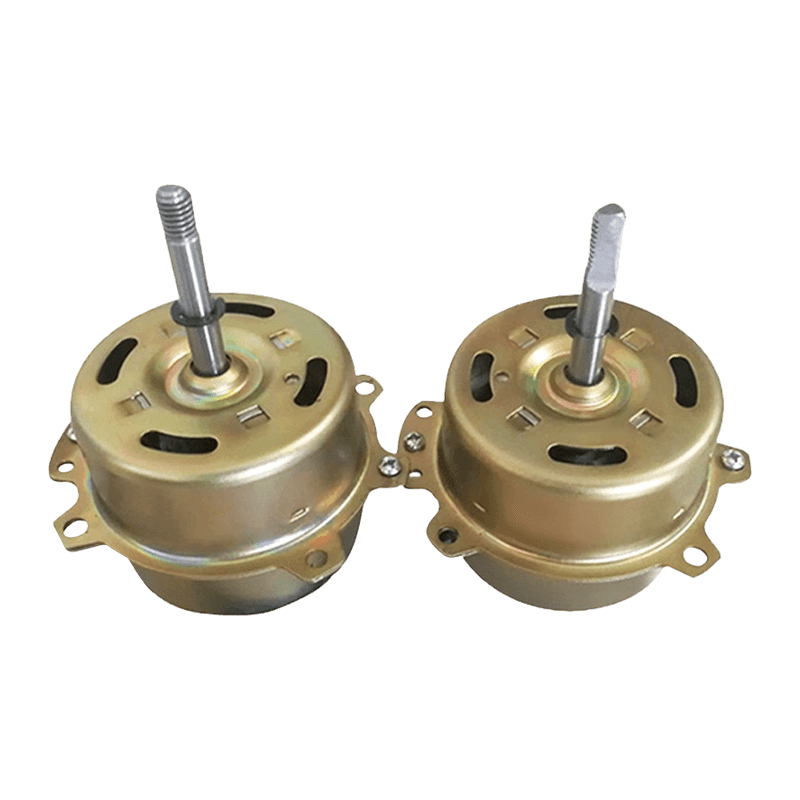 YYHS-30 Integrated Ceiling Ventilator Motor with Bidirectional Ball BearingsA low-noise bidirectional ball-bearing motor for integrated ceiling ventilators, designed for stable long-term operation and efficient airflow in household ventilation equipment.View Product →
Bathroom heaters and humid, warm-air appliances add a second challenge: moisture and heat. Motors used here need reliable insulation, corrosion-resistant bearings and a housing that tolerates condensation over years of daily use.
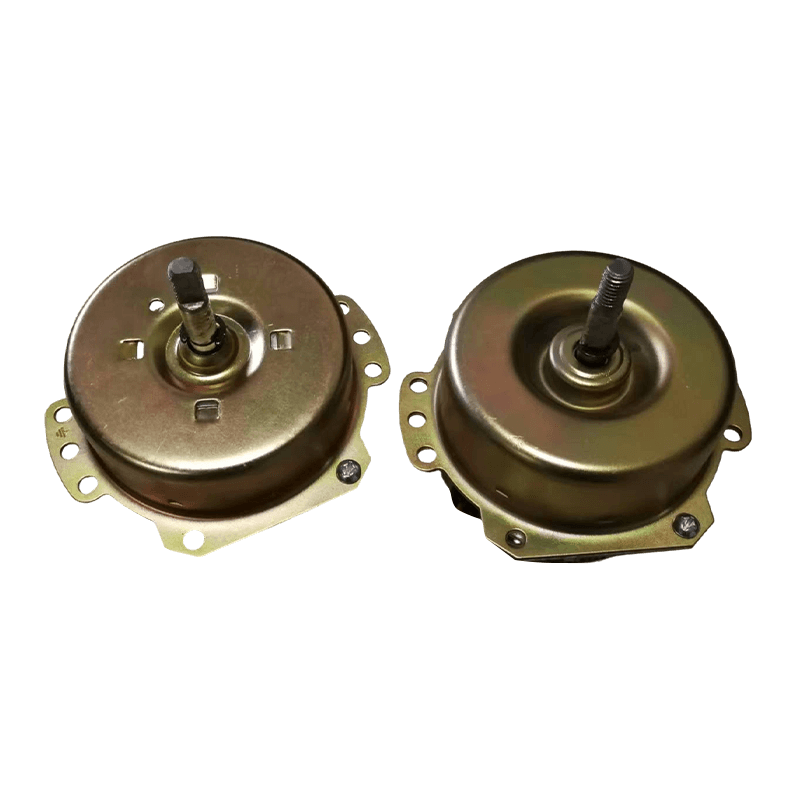 Waterproof Exhaust Fan and Bathroom Heater MotorA moisture-resistant dual-function motor for bathroom exhaust and heating, offering quiet operation, overload protection and long-life performance in humid residential or commercial ventilation systems.View Product →
Where airflow is the priority and the space is tight, high-speed ventilation motors for elevator cabins and similar enclosed spaces need to move a meaningful volume of air while staying quiet enough to be forgotten about.
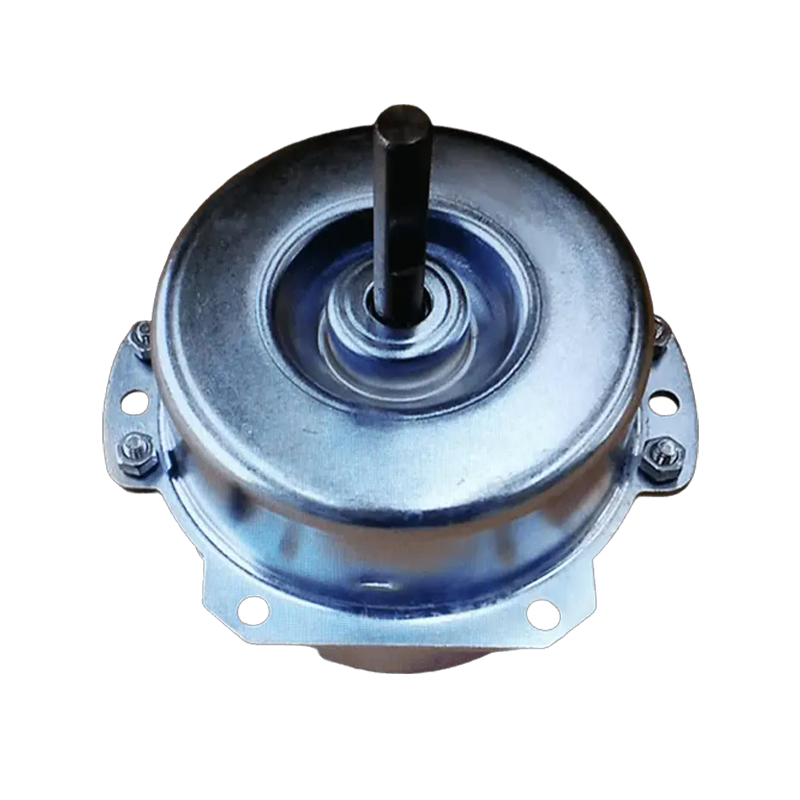 Elevator Ventilation High-Speed Fan MotorA high-speed, low-noise motor for elevator cabin ventilation, built for rapid air exchange, high-temperature resistance and stable operation in enclosed, high-load environments.View Product →
Whether you end up with a brushless blower or a mains-powered fan motor, the same handful of questions will save you a costly redesign.
Specification sheets only take you so far. Most of the difficult decisions, bearing selection, insulation class, voltage and frequency adaptation for a particular market, come down to experience with similar products. We work with appliance manufacturers around the world on exactly these questions, and we are always happy to look at a drawing or a sample and tell you honestly what will work and what will not.
If you would like background on how small motors are chosen across different appliance categories, our guide to the types and uses of home appliance AC motors is a useful starting point. You can also browse our motor product range to see the ventilation, fan, laundry and food-processing motors we build today. Tell us what your ventilator or ventilation appliance needs to do, and we will help you find the motor that does it quietly, reliably and at a sensible cost.
Recommended Products

Contact Us
+86 0575 83078988
+86 13605855838
+86 17769850789
13605855838
No. 20, Zhiye Road, Changle Town, Shengzhou City, Shaoxing City, Zhejiang Province
Contact Us
 Custom Mini AC Motor Manufacturers