English
 中文简体

Quick Product Search
Contact us to learn how we can use our expertise to bring you high-quality products.
2026-09-10
A hotel manager fields the same complaint every summer: the elevator feels stuffy, and lately the fan hums loudly enough to hear over the lobby music. Replacing the blade does not fix it. Swapping the whole fan unit works, but nobody can explain why the old one failed. In the overwhelming majority of cases, the culprit is the elevator fan motor itself - the small AC motor hidden above the ceiling panel - and the real fix is choosing a replacement with the right specifications rather than the cheapest nameplate. This article walks through what these motors do, which numbers genuinely matter, how they fail, and how to evaluate a supplier before committing to a volume order.
An elevator cab is a sealed steel box traveling through a hoistway that is often several degrees hotter or colder than the landing floors. Body heat from even a handful of passengers pushes the cab temperature up within minutes, and without air exchange, odors and stuffiness build up just as quickly. That is why recognized safety codes - ASME A17.1/CSA B44 in North America is the best-known example - require the car to have a means of ventilation. The cab fan, usually a compact axial fan or centrifugal blower mounted above the ceiling, provides it.
The motor inside is a small AC machine, typically rated between 15 and 60 watts, and it is built for long, continuous running rather than occasional use. Compared with a desk fan motor, it faces three harder constraints. It must stay quiet inside an enclosed space that behaves like a sound chamber. It must tolerate duty cycles measured in hours per day, every day. And it must match the building's supply voltage and frequency, which change entirely from one export market to the next.
When quotations from different suppliers arrive, compare the numbers in the table below before comparing prices.
| Specification | Typical Range | Why It Matters |
|---|---|---|
| Rated voltage / frequency | 110-120 V or 220-240 V; 50 or 60 Hz | Mismatched supply causes overheating and premature winding failure |
| Power output | 15-60 W | Sets airflow; oversized units add noise without adding comfort |
| Rated speed | 1,300-3,000 rpm | Higher speed moves more air but raises noise sharply |
| Noise level | Below about 45 dB at 1 m | The cab amplifies sound; this is the figure passengers actually hear |
| Bearing type | Sleeve or sealed ball | Ball bearings hold quiet operation far longer under continuous duty |
| Speed settings | Single, 2-speed, or 3-speed | Multi-speed taps let installers balance airflow against noise on site |
Two rows in that table carry the most weight in real projects. Noise level is the specification passengers judge you by, because an empty steel cab reflects and amplifies sound; a motor measuring a few decibels lower on the bench feels dramatically quieter inside the car. Voltage and frequency matter just as much for reliability: a motor run outside its rated supply will overheat or drift in speed no matter how well it was built. Multi-speed windings, common on better ventilation motors such as the high-speed elevator ventilation fan motor platform, give the installer a way to tune airflow against noise after the cab is commissioned - a three-speed motor solves problems a single-speed motor cannot.
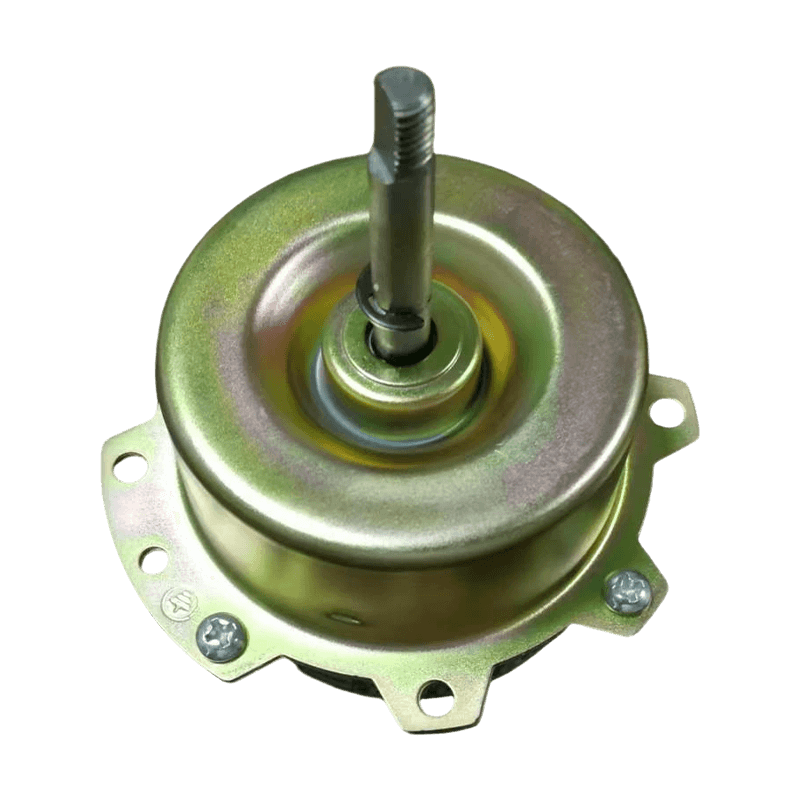
 High-Speed Elevator Ventilation Fan Motor for Cab Air CirculationA high-speed motor built to drive elevator cab fans, circulating air quickly to remove stuffiness, humidity, and odors while keeping vibration and noise low during continuous high-load operation, making it worth reviewing when noise level and airflow tuning matter most.View Product →
Sleeve bearings keep the unit price low, and they perform acceptably in applications that run intermittently. Elevator cabs are not that application. Under continuous duty, the oil film in a sleeve bearing gradually depletes, and the first symptom is a low hum that sharpens month by month until passengers notice it. Sealed ball bearings hold shaft alignment under sustained running and preserve the original noise profile for years, which is why quality ventilation motors - including low-noise, double-ball-bearing designs used in ceiling and cab ventilators - specify them as standard.
Noise in a cab rarely comes from raw airflow alone. Vibration does most of the damage. An unbalanced rotor or blade, or a motor bolted rigidly to the ceiling panel, turns the panel into a soundboard that broadcasts every revolution. When reviewing a motor, ask whether the rotor is dynamically balanced, whether the mount uses rubber or spring isolation, and whether the windings are pure copper. Copper windings handle heat more predictably than aluminum substitutes, and thermally protected, permanently lubricated designs remove the two failure points service technicians encounter most often.
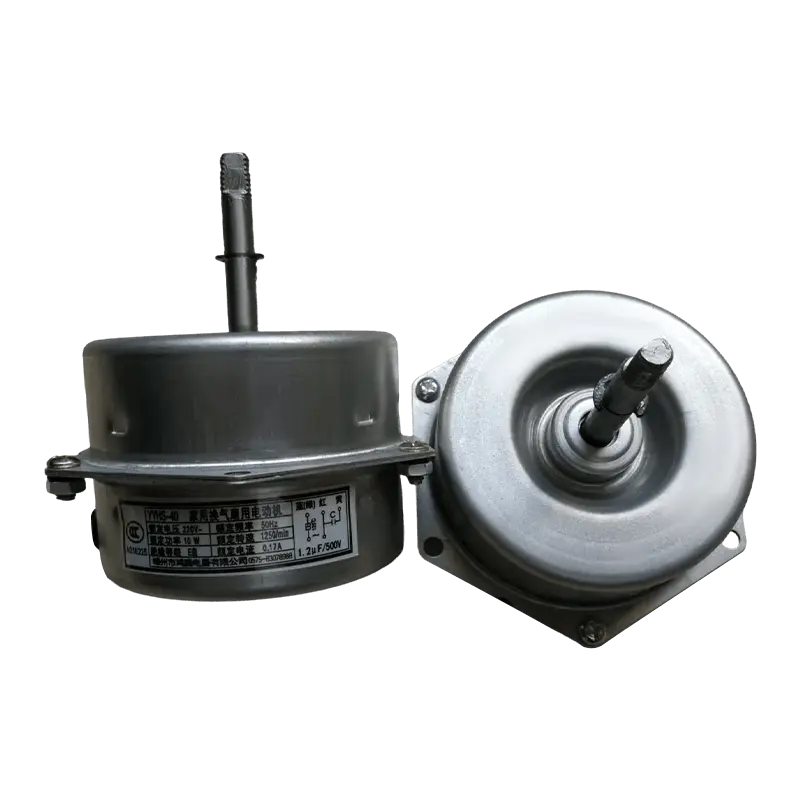
 YYHS-40 All-Copper Ball Bearing Ventilation Fan MotorThis motor uses all-copper windings and sealed ball bearings for stable, low-noise, long-duration running, and its universal design suits household and ventilation fans, addressing the vibration, heat, and bearing wear concerns discussed for continuous-duty installations.View Product →
A 220 V, 50 Hz motor will not simply work on a 110 V, 60 Hz supply, and the failure modes are not subtle. Speed scales with frequency: a motor designed for 50 Hz connected to 60 Hz turns roughly 20 percent faster, which raises airflow but also noise and bearing load. Run a 60 Hz motor on 50 Hz and it turns slower while its cooling fan slows with it, so the windings run hotter than designed. Buyers in North America generally need 110-120 V at 60 Hz; most of Europe, Asia, and the Middle East run 220-240 V at 50 Hz.
This is where factory-direct manufacturers separate themselves from trading companies. Shengzhou Hongteng Electric Appliance, for example, designs and builds small AC motors in its own plant in Zhejiang's motor industrial belt and configures voltage, frequency, speed, and mounting to the customer's grid and cab design, rather than forcing a standard unit to fit.
Most field complaints trace back to five predictable causes:
For elevator maintenance companies, stocking a motor with standardized mounting holes and multi-speed taps turns a two-visit job into a single visit, which is exactly why those small design details are worth specifying at purchase time.
Three questions cut through most sales material. First, does the supplier manufacture or resell? A factory with its own winding, die-casting, and assembly lines can adapt a design in days; a trader must wait for someone else's production schedule. Second, can they customize? Voltage, frequency, speed taps, shaft dimensions, and mounting patterns are all negotiable with a genuine engineering team. Third, what do they test? Insulation resistance checks, noise measurement, and life testing separate a serious operation from one that ships whatever comes off the line.
Hongteng's profile illustrates what to look for: more than twenty years in small AC motor production, an in-house team of motor design engineers, complete production and testing equipment, and short delivery times because it sells what it builds. Buyers can review the company's dedicated elevator fan motor series to see how these characteristics translate into an actual product range. For readers who want the wider context, this guide to home appliance AC motor types and uses explains how the same motor families are adapted across ventilation, cooling, and cleaning products.
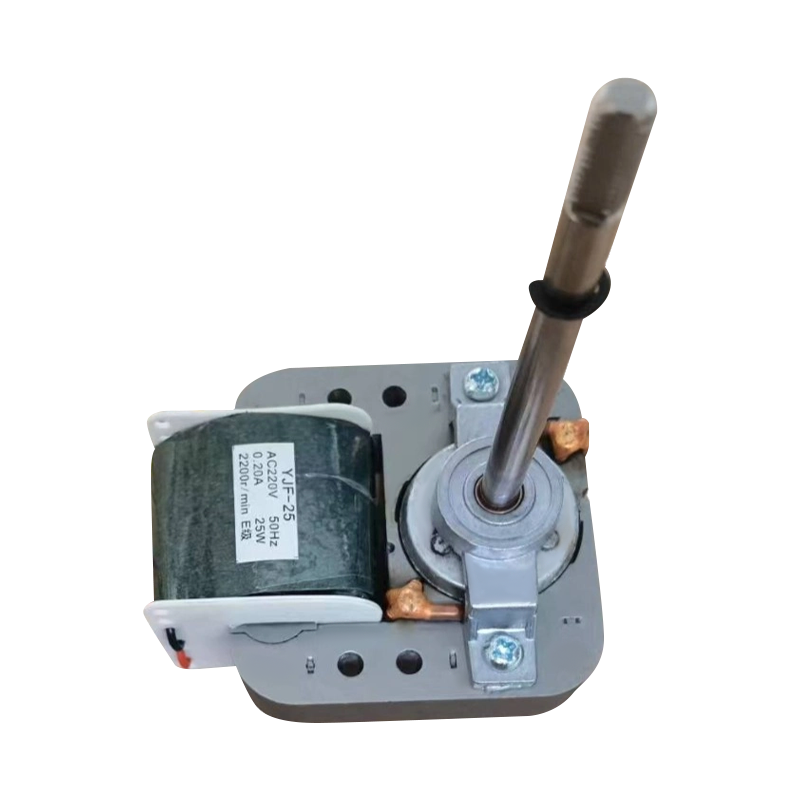
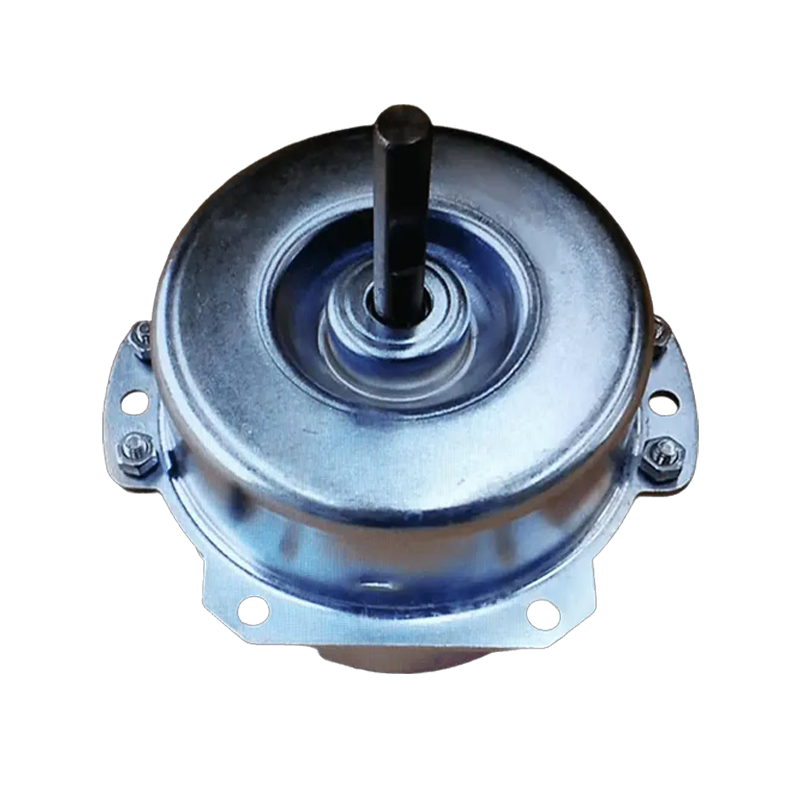 Elevator Fan AC Motor Manufacturer Product RangeA dedicated elevator fan motor series from a manufacturer with over twenty years in small AC motor production, in-house design engineers, and full testing equipment, offering efficient, quiet motors built to handle humidity, dust, and temperature swings inside elevator cabs.View Product →
The priority order is simple: match the supply voltage and frequency first, insist on ball bearings second, demand a documented noise figure third, and keep multi-speed flexibility in reserve for commissioning. Then order samples and listen to them in a real cab, because a bench number never tells the whole story. Passengers will never see the motor you chose - they will only hear whether you chose it well.
Recommended Products

Contact Us
+86 0575 83078988
+86 13605855838
+86 17769850789
13605855838
No. 20, Zhiye Road, Changle Town, Shengzhou City, Shaoxing City, Zhejiang Province
Contact Us
 Custom Mini AC Motor Manufacturers