English
 中文简体
中文简体

Quick Product Search
Contact us to learn how we can use our expertise to bring you high-quality products.
2026-09-03
A countertop ice crusher that sails through fruit but stalls the moment a full scoop of cubes reaches the blades usually traces back to one decision: the motor was never matched to the crushing load. Ice is one of the hardest routine materials a small appliance motor has to process. Cubes shift, jam, and lock together, so the motor needs enough torque to break free from a standstill and enough speed to shave the ice evenly once it is moving. Every major design choice inside an ice crusher motor follows from that requirement.
This guide sets out what these motors actually do, which specifications separate a durable unit from a marginal one, why they stall, overheat, or fall silent, and what buyers should verify before placing an order. Each section leads with the practical conclusion so you can act on it without digging.
Crushing is intermittent, high-resistance work, not steady rotation. A typical batch follows a repeating load profile: a hard starting peak as the blades bite into the initial cubes, a run of shock loads as individual cubes crack apart, and then a lighter finishing phase once the ice has broken down. A motor that performs well in a free-spinning bench test can still fail this profile in a real machine, which is why starting behavior deserves as much attention as rated power.
Three motor families cover many ice crushers on the market:
If you are comparing motor types across a wider appliance portfolio, the ultimate guide to home appliance AC motors explains how these families differ in structure and typical applications.
For machines built around fast commercial output, a dedicated high-speed design is the usual starting point:
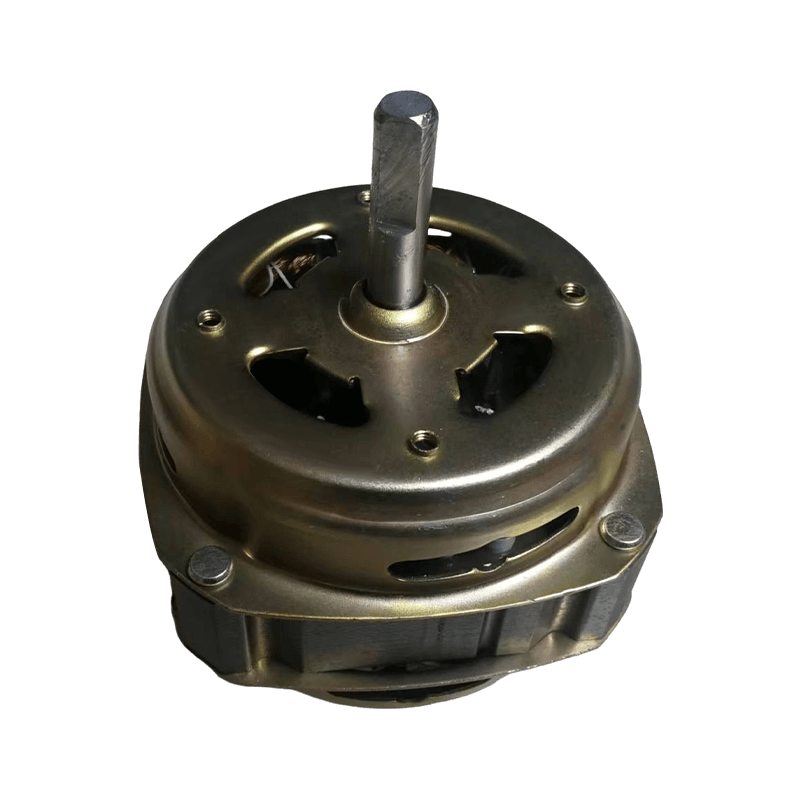
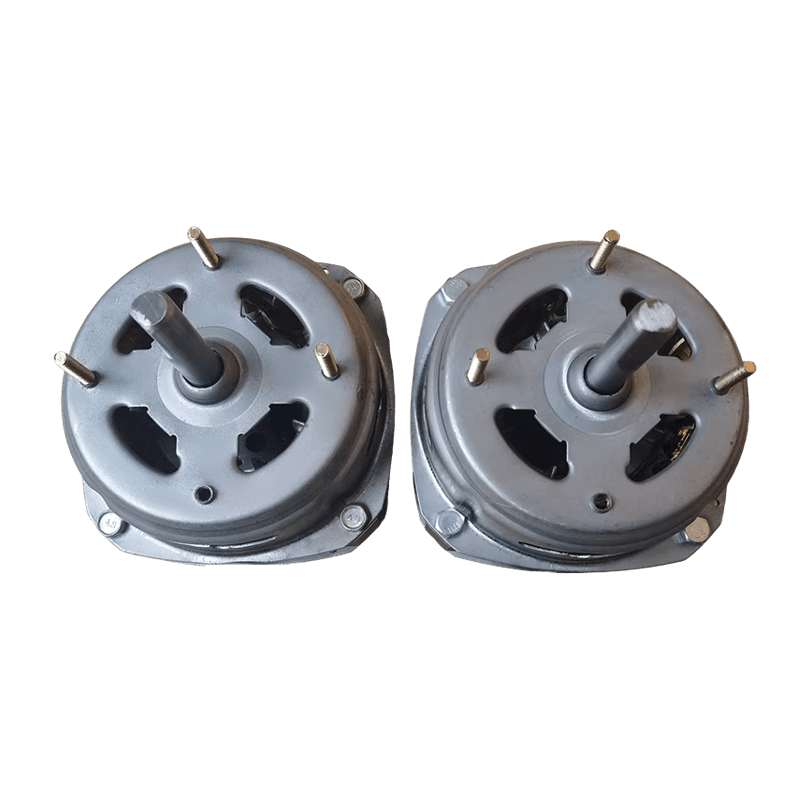 High-Speed Ice Crushing Machine Motor for Commercial UseBuilt to drive ice crushers at very high speeds for restaurants, bars, hotels, and beverage production. Featured here as the dedicated high-speed option when fast output and continuous heavy-duty operation are the priority.View Product →
Up front: rated wattage alone will not tell you whether a motor survives ice duty. Starting torque, duty cycle, thermal protection, and materials decide how the motor behaves in month twelve, not month one. Use the checklist below when reviewing supplier datasheets.
| Specification | Why It Matters | What to Look For |
|---|---|---|
| Rated power (W) | Sets how large a batch the machine can process before the motor labors. | Household units commonly sit in the low hundreds of watts; commercial machines need headroom above that. |
| Starting torque | Decides whether the blades can break free when a cube jams the mechanism. | High torque at standstill; capacitor-start designs hold a clear advantage. |
| Rated speed (RPM) | Higher blade speeds cut finer, more uniform ice. | Balance speed against noise and bearing wear. |
| Duty cycle | Crushing loads generate heat quickly. | Thermal ratings and protection matched to realistic batch-after-batch use. |
| Voltage and frequency | Export markets run on different grids. | 110-120 V/60 Hz and 220-240 V/50 Hz variants wound to order. |
| Windings and bearings | Shock and vibration punish cheap materials quickly. | Full copper windings; ball bearings where noise and lifespan matter. |
Two rows deserve extra scrutiny: winding material and frequency. Some low-cost motors substitute aluminum-based conductors for copper, which raises resistance and shortens life under repeated heat cycles. At 60 Hz a motor turns roughly 20 percent faster than the same winding at 50 Hz, which changes both blade speed and heat generation, so a motor validated for one grid cannot simply be assumed safe on another.
Field failures cluster into a few predictable patterns, and each pattern points to a specific cause. Reading the symptom correctly is much of the repair.
This is a locked rotor. Ice jammed above the blades, a seized bearing, or a failed start capacitor all produce the same sound: the winding is energized but the shaft cannot rotate. Unplug the machine before investigating, because a stalled motor draws locked-rotor current and can damage its windings within a minute. Clear the jam and test again; if the hum persists with an empty chamber, the starting component is the likely culprit.
Repeated cutouts mean the thermal protector inside the motor is cycling. The trigger is heat, and the usual sources are running longer than the duty cycle allows, low supply voltage that forces higher current draw, or crushed ice packed around the housing that blocks cooling. Letting the motor rest restores operation, but the real fix is operational: smaller batches, shorter runs, and clearance around the motor compartment.
Complete silence usually indicates an open thermal fuse, a broken winding, or a failed internal connection. A resistance check across the terminals confirms it, since an open reading means the motor will not recover on its own. A burning smell during operation, or a grinding noise that worsens over weeks, points to insulation stress or worn bearings, and in both cases replacement is safer and cheaper than continued use.
The same crusher design can need different motors depending on where it will be sold and what it will be asked to do. Voltage and frequency should be settled early: a motor wound for 220-240 V at 50 Hz will over-speed and overheat on a 120 V/60 Hz grid even through a plug adapter, so export motors are wound specifically for the destination market. Shaft diameter, mounting holes, and lead-wire length then have to line up with the crusher housing, and food equipment adds hygiene and safety requirements around the motor bay.
Suppliers that wind and assemble their own motors can adapt these variables without long tooling delays. Shengzhou Hongteng Electric Appliance Co., Ltd., a household motor manufacturer based in Shengzhou, Zhejiang, builds its ice crusher motors within a broader food-machinery motor program and adjusts voltage, frequency, and mechanical interfaces to customer specifications:
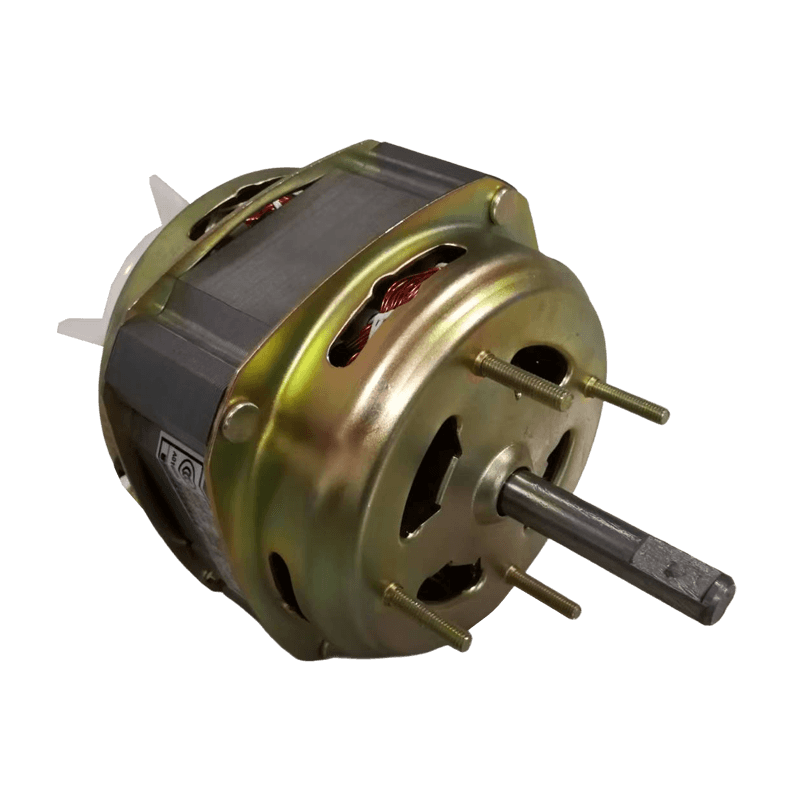
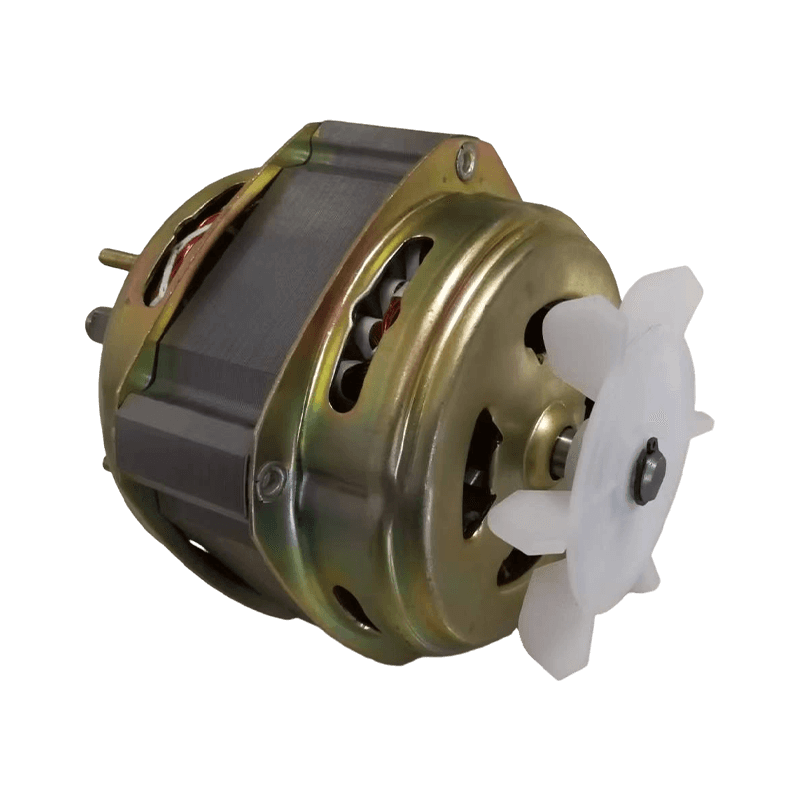 Food Machinery Ice Crusher Motor for Commercial KitchensDesigned for humid, demanding kitchen and beverage settings, with stable power under high load, a low-noise design, and water and dust protection. Relevant where buyers need adaptable voltage, frequency, and mechanical interfaces.View Product →
Sample testing and written specifications settle many sourcing questions early. A supplier with its own factory and engineering team should answer the following without hesitation:
For buyers developing a wider food-processing appliance line rather than a single crusher, a supplier that covers adjacent applications from the same motor platform shortens development time considerably:
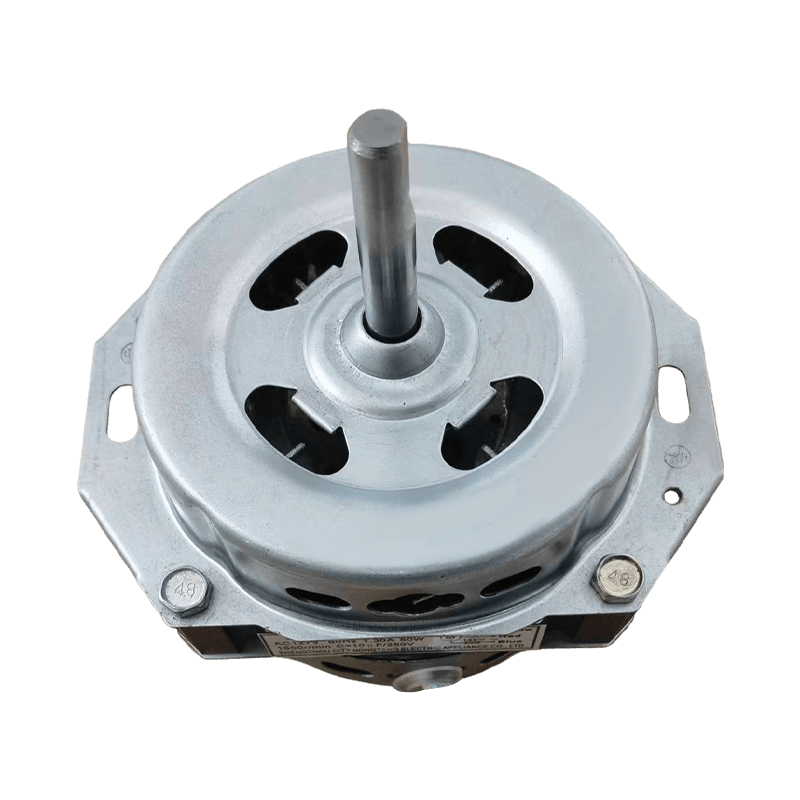
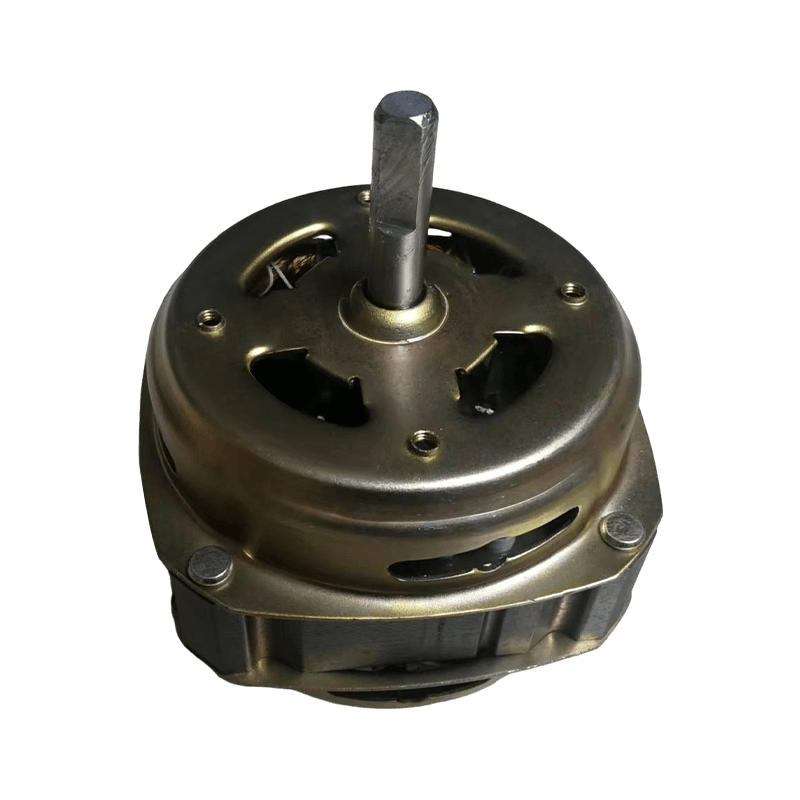 Motors for Food Processing Machinery ApplicationsA versatile motor series for cutting, mixing, grinding, and other food equipment, with waterproof, dustproof construction and hygienic design. Useful for buyers building broader appliance lines on one supplier platform.View Product →
An ice crusher motor succeeds or fails on torque under load, thermal headroom, and build quality, in that order. Match the motor family to the duty cycle, confirm the electrical specification against the destination market, and test samples with real ice before committing to volume. The full ice crusher motor product line is a practical starting point for comparing food-machinery, high-speed, and general food-processing variants side by side, and buyers who treat the motor as the defining component of the machine rather than a commodity part avoid many of the common field failures and the warranty costs that follow them.

Contact Us
+86 0575 83078988
+86 13605855838
+86 17769850789
13605855838
No. 20, Zhiye Road, Changle Town, Shengzhou City, Shaoxing City, Zhejiang Province
Contact Us
 Custom Mini AC Motor Manufacturers