English
 中文简体

Quick Product Search
Contact us to learn how we can use our expertise to bring you high-quality products.
2026-09-25
An exhaust fan can only move air when its motor works. If you are researching an exhaust fan with motor, whether for a replacement program, a new product line, or spare parts, the motor is the component that determines airflow, reliability, and noise. We design and manufacture exhaust fan motors at our factory in Shengzhou, China, and in this article we want to share what we look for when helping customers choose the right motor.
One of the most common questions we hear from buyers is why two exhaust fans with the same blade size can perform so differently. The answer is usually the motor. A motor with insufficient torque will struggle to spin the blade, especially when the fan has to push air through a duct. It will draw higher current, run hot, and become noisier over time. A properly matched motor, on the other hand, accelerates quickly, moves the specified air volume, and keeps the fan quiet over its service life.
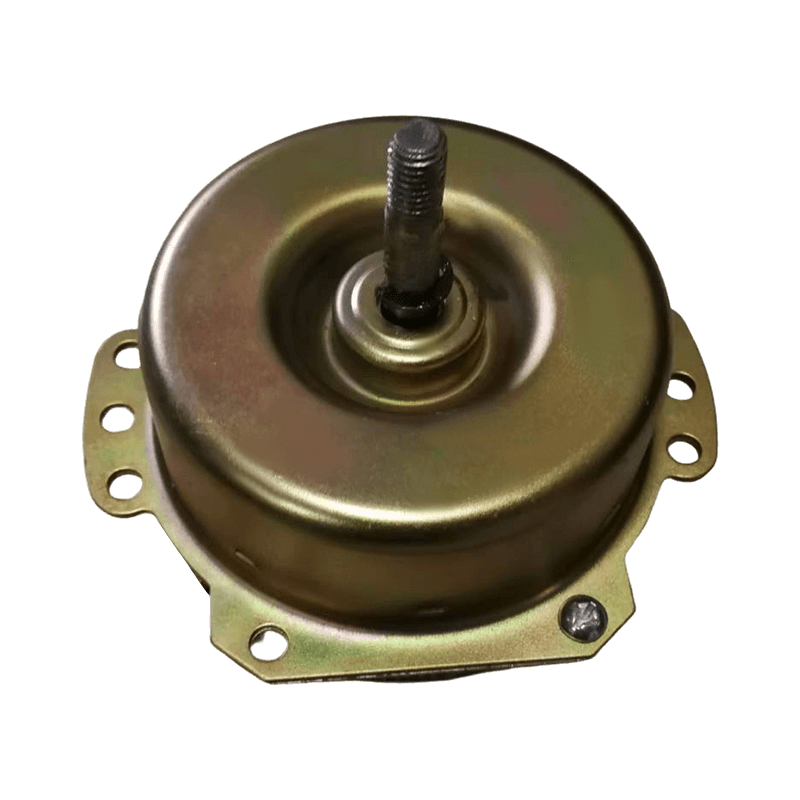
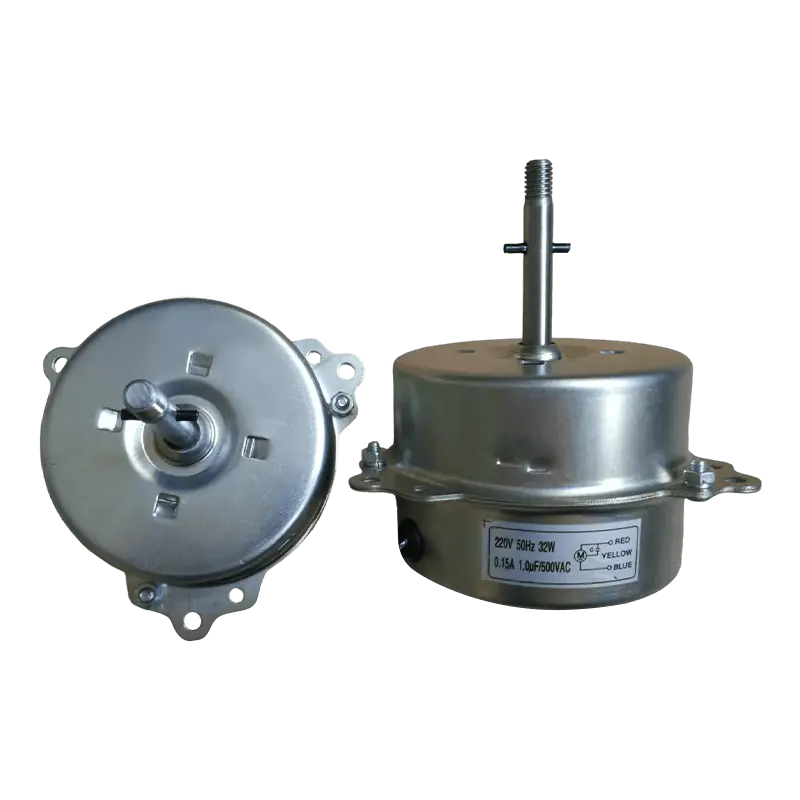
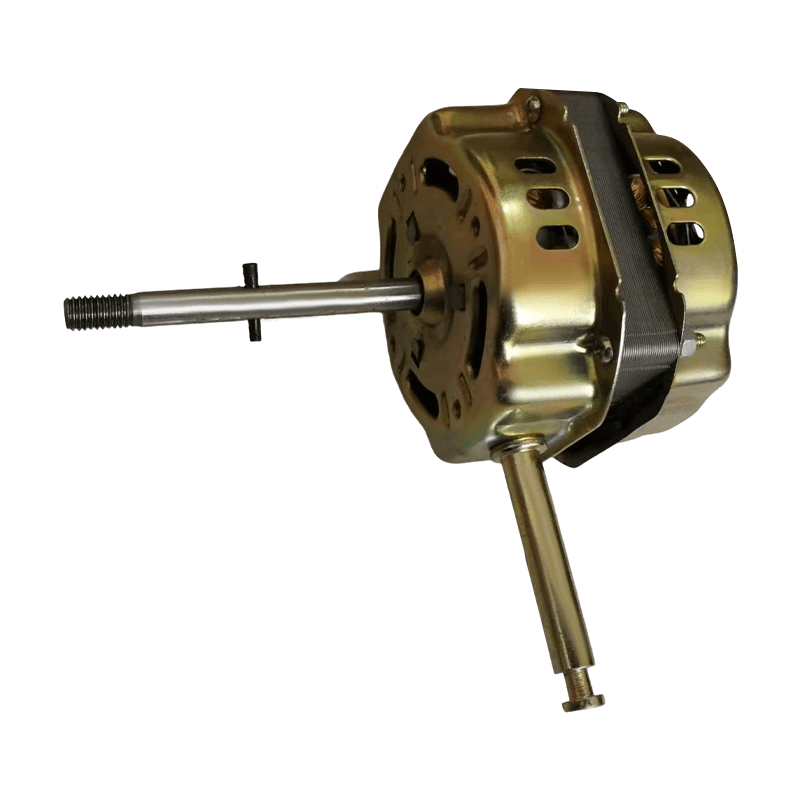
For a standard household ventilation fan, it is difficult to beat a well-made AC motor with quality materials. In our range, the YYHS40 universal household ventilation fan motor uses all-copper wire and ball bearings, which makes it dependable for normal bathroom and utility-room ventilation fans.
 YYHS-40 All-Copper Wire Ball Bearing Universal Ventilation Fan MotorThis motor uses all-copper wire and ball bearings, making it a reliable choice for standard household ventilation fans. Its stable performance suits bathroom and utility-room fans where dependable operation matters.View Product →
When buyers compare motors, they sometimes focus only on wattage. That can be misleading, because voltage, speed, bearings, rotation, and shaft size are equally important. The table below summarizes the main items we recommend checking before you select an exhaust fan with motor.
| Specification | Why It Matters | Typical Range |
|---|---|---|
| Voltage and frequency | Must match the power supply in the target market; a mismatch can cause overheating or low speed. | 120 V / 60 Hz or 220-240 V / 50 Hz |
| Speed settings | Multi-speed motors make it easier to adjust airflow and noise. | Single-speed or three-speed |
| Power input | Defines the torque available to turn the fan blade under load. | 15 W to 60 W |
| Bearing type | Ball bearings support heavier loads and longer service; sleeve bearings can be quieter early in life. | Ball or sleeve |
| Rotation direction | Some ceiling ventilators need reversing capability for different airflows. | One-way or bidirectional |
| Noise level | Important for bedrooms, bathrooms, and quiet commercial spaces. | Low-noise construction |
| Shaft dimensions | Diameter and length must fit the blade hub and mounting bracket. | Depends on fan design |
The numbers on a datasheet are only useful when they relate to a real application. A low-speed setting is good for a quiet bathroom fan, but if the motor lacks torque at that speed, the blade will not deliver enough airflow. That is why we test exhaust fan motors under load conditions.
Exhaust fans are installed in different housings, so the motor must follow the application. The following two examples show how motor construction changes based on the environment.
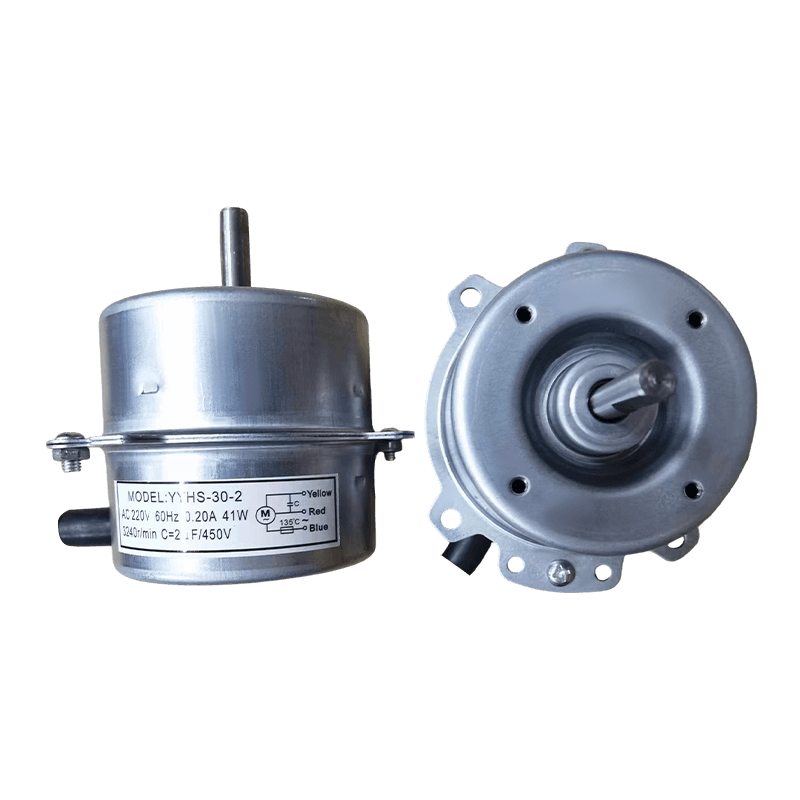
Ceiling-mounted ventilators fit into a compact housing between the ceiling and the roof. The motor must be short, quiet, and able to run for extended periods. Some designs also require bidirectional rotation so the fan can move air in either direction. Low-noise, bidirectional ball motors are a practical choice because they combine smooth operation with long bearing life.
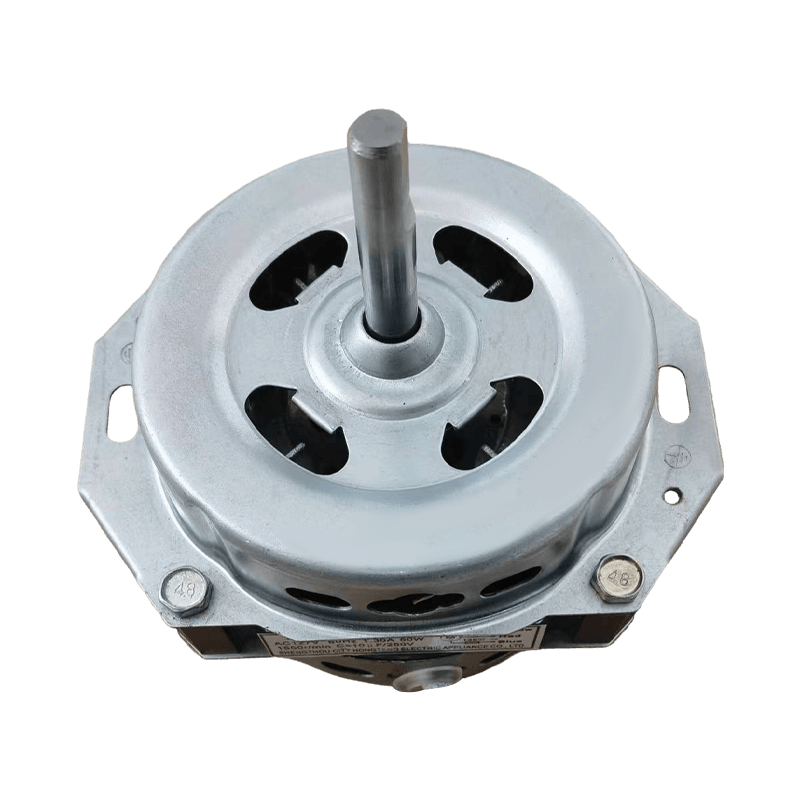
 YYHS-30 Low-Noise Bidirectional Ball Motor for Ceiling VentilatorsDesigned for integrated ceiling ventilators, this motor offers bidirectional rotation and low-noise operation. Its ball bearings and copper windings support extended use, making it practical for ceiling-mounted exhaust fans.View Product →
Bathroom fan-heater units place the motor close to a heating element. This creates a hotter operating environment, so the motor needs stable torque, reliable insulation, and a continuous-duty design. A motor that works well in a simple ventilating fan may not survive the extra heat in a fan-heater unit.
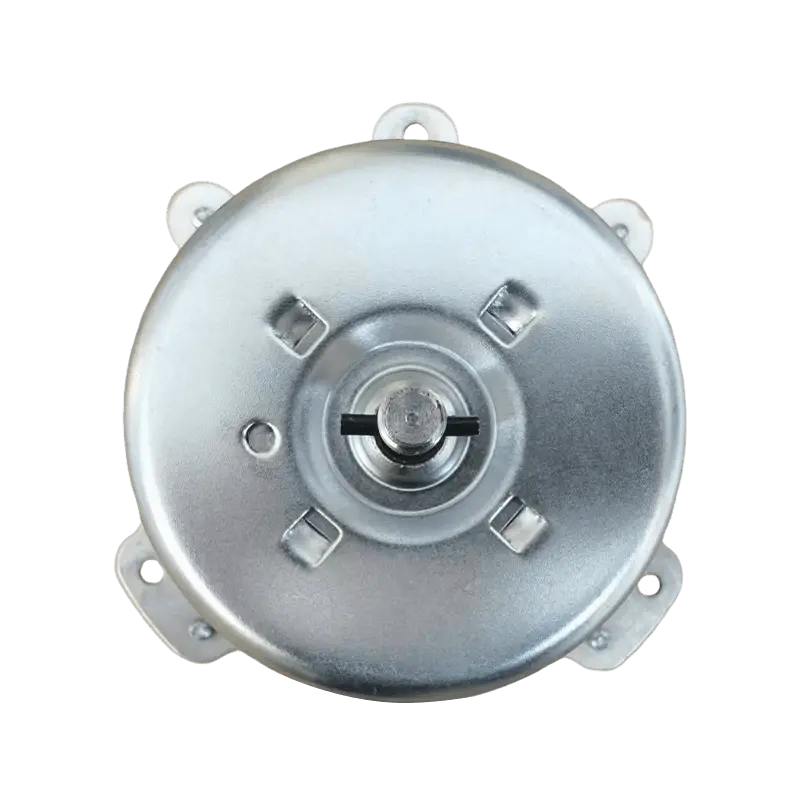
 Exhaust Fan and Bathroom Heater Motor with Moisture ProtectionThis dual-purpose motor handles exhaust and heating in humid bathroom environments. With waterproof construction and overload protection, it suits homes, hotels, and offices where reliable ventilation and warmth are needed.View Product →
After the motor type, the next step is to match the motor to the physical mounting and airflow path. This is where a small dimensional mistake can cause the most trouble. The motor frame, screw holes, shaft diameter, shaft length, and wire leads all need to fit the fan housing and blade hub. If you are an original equipment manufacturer, sending your drawing to the motor supplier before sampling avoids costly modifications later.
Replacing a failed exhaust fan motor is a common job for maintenance teams and service centers. In many cases, the original fan is still in good condition and only the motor needs to be renewed. Before ordering a replacement exhaust fan with motor, confirm the following points:
It is also worth checking the condition of the fan blade and mounting bracket. A bent blade or worn bearing seat can damage a new motor quickly. Replacing the motor while leaving the rest of the assembly unbalanced will simply repeat the failure.
Price is easy to compare; long-term quality is harder to see. For a durable exhaust fan with motor, the materials inside the motor make the biggest difference. These are the quality indicators we emphasize in our own production:
At our factory, every batch is checked with our testing equipment. Our R&D focus helps us refine motor designs so they run cooler and more efficiently over time.
One advantage of working with a motor manufacturer is that the specification can be customized before you place a large order. We can produce motors with different voltages and frequencies for different countries, and we can adjust speed settings, shaft length, lead wire, and connector choices. Because we operate our own factory, communication is direct and sample changes can be made quickly.
Our factory in Shengzhou, Zhejiang, has years of experience in motors for exhaust fans, electric fans, washing machines, and other household appliances. If you need a specific exhaust fan with motor for a new product line, it pays to start with a factory-direct motor supplier that can discuss practical manufacturing details.
An exhaust fan with motor may look like a simple appliance, but the motor inside it determines whether the fan moves enough air, stays quiet, and lasts for years. Start with a clear specification: voltage, speed, bearing type, shaft size, and duty cycle. Then confirm that the motor producer has the manufacturing experience and testing process to deliver consistent quality. Good motor selection is the difference between a fan that gets returned and a fan that builds customer trust.
Recommended Products

Contact Us
+86 0575 83078988
+86 13605855838
+86 17769850789
13605855838
No. 20, Zhiye Road, Changle Town, Shengzhou City, Shaoxing City, Zhejiang Province
Contact Us
 Custom Mini AC Motor Manufacturers