English
 中文简体
中文简体

Quick Product Search
Contact us to learn how we can use our expertise to bring you high-quality products.
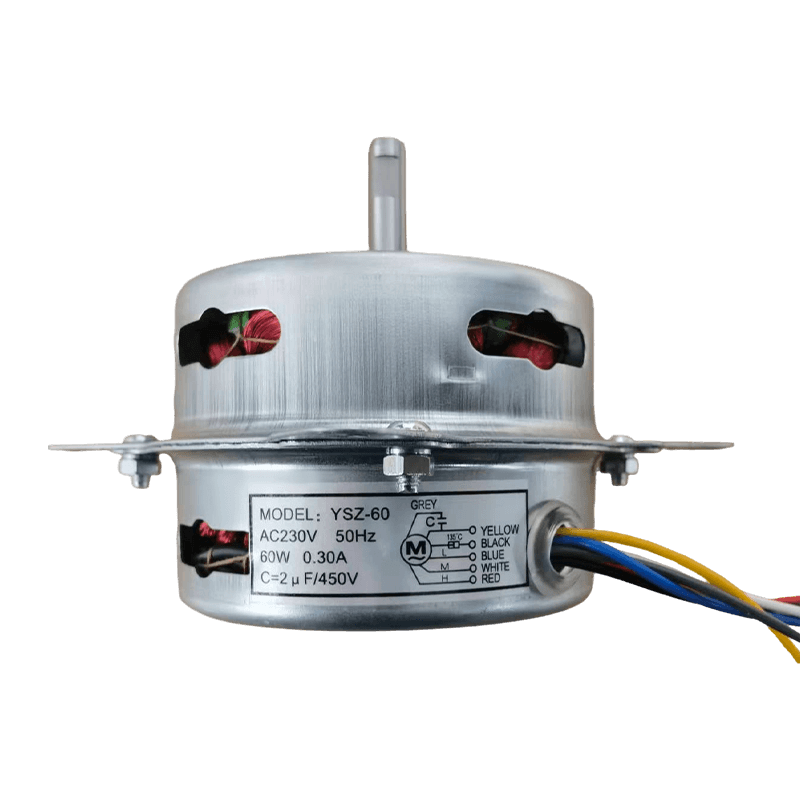
The Air Conditioner Fan Motor is a core motor specifically designed for household fans, used to drive the fan blades for air circulation and cooling. These motors typically feature high efficiency, stable output, and high-temperature resistance, maintaining low noise and reliable performance even during prolonged continuous operation. Whether for home or commercial use, the Air Conditioner Fan Motor is a crucial power component that ensures sufficient airflow, efficient heat dissipation, and overall stable operation, and is widely used in homes, factories, and shopping malls.
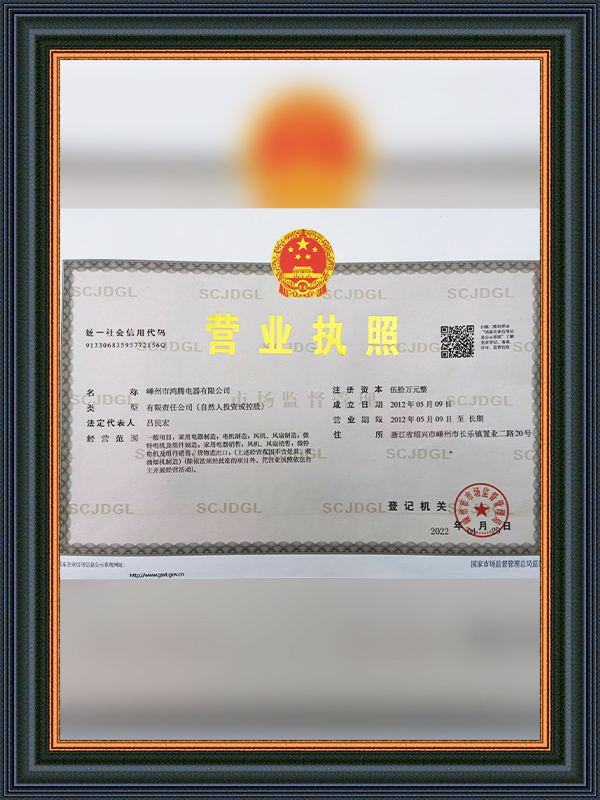
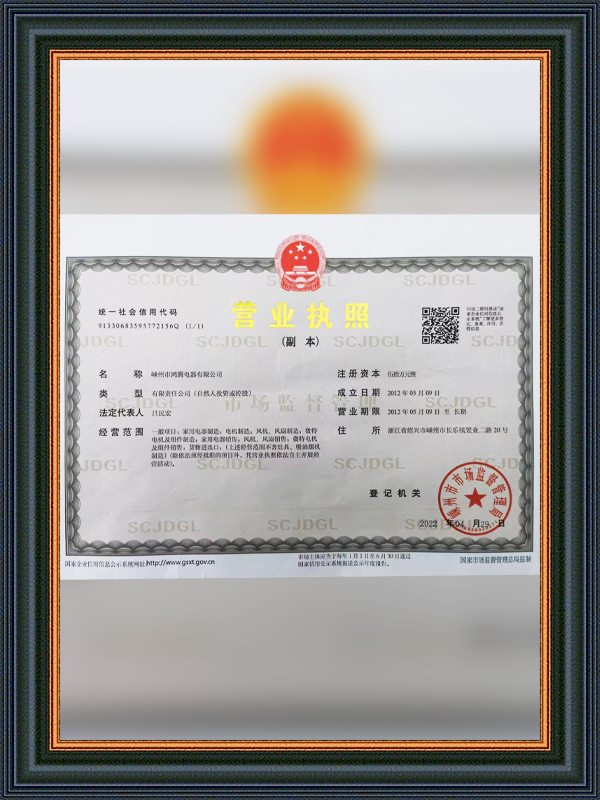
Shengzhou Hongteng Electric Appliance Co., Ltd. is located in the Motor Industrial Park of Changle Town, Shengzhou City, Zhejiang Province, renowned as the "Hometown of Yue Opera" and the "Motor Hub." As a specialized enterprise, it primarily designs, manufactures, and markets various electric motors for domestic and international household appliances. Its products are widely used in exhaust fans, electric fans, air cooler fans, elevator fans, washing machines, spin dryers, air purifiers, ice crushers, and noodle machines, among others. The company can also provide motors with different voltages and frequencies based on customer requirements.
As China Air Conditioner Fan Motor Manufacturers and Air Conditioner Fan AC Motor Suppliers, after over two decades of development, the company has acquired a complete set of advanced production equipment, comprehensive testing facilities, and a team of motor design engineers who adhere to the principle of "Quality First, Sincere Service." Through continuous innovation, it strives to deliver energy-efficient, high-quality products to customers. We welcome partners from around the world to collaborate and create a brighter future together.
The air conditioner fan AC motor plays a key role in regulating airflow within the system. Traditionally, air conditioners operate at a constant speed, delivering a fixed amount of airflow. However, in recent years, many air conditioner manufacturers, such as Shengzhou Hongteng Electric Appliance Co., Ltd., have integrated advanced speed control mechanisms into their AC motors. This allows the motor to adjust its speed based on the cooling demands of the room, which can help save energy and improve overall efficiency.
Speed control for air conditioner fan motors is typically achieved through variable speed drives (VSDs) or electronically commutated motors (ECMs). These technologies enable the motor to adjust its rotational speed in response to changes in the temperature and airflow requirements of the environment. By modulating the motor's speed, the fan can operate at lower speeds during periods of low cooling demand, reducing energy consumption without sacrificing comfort.
Speed control offers significant energy-saving benefits by matching the motor's output with the actual demand. During periods of moderate or low cooling requirements, the air conditioner's fan motor can operate at a lower speed, consuming less electricity. This variable operation contrasts with traditional fans, which run at full speed regardless of the load, resulting in wasted energy. The ability to adjust the speed of the fan motor based on environmental conditions helps minimize energy consumption and reduces overall operating costs.
In addition to energy savings, the integration of speed control into air conditioner fan motors enhances system performance. By operating the fan motor at a speed that matches the cooling demand, the system can provide more precise temperature regulation. This ensures that the air conditioner maintains a comfortable environment without overcooling or wasting energy. Moreover, operating at lower speeds reduces wear and tear on the motor, potentially increasing the longevity of the air conditioning system.
Air conditioner fan motors with speed control can adjust to different environmental factors, such as room size, external temperature, and humidity. During cooler months or when a room is already at the desired temperature, the motor can reduce its speed, consuming significantly less power while still circulating air efficiently. In contrast, during hotter periods, the motor can ramp up its speed to increase airflow and meet higher cooling demands. This dynamic adjustment ensures that the air conditioner only uses as much energy as necessary, reducing overall power consumption.
In addition to energy savings, speed control in air conditioner fan motors also helps reduce operational noise. When the fan motor operates at a lower speed, the amount of noise produced is minimized, leading to quieter operation. This is particularly important in residential or office environments where noise can be a concern. By running at variable speeds, the fan motor reduces both noise and energy consumption, creating a more comfortable and energy-efficient environment.
Modern air conditioners often incorporate smart technologies that allow users to monitor and control the speed of the fan motor. These systems can automatically adjust the motor’s speed based on factors such as room temperature, humidity levels, and user preferences. Through Wi-Fi or Bluetooth connectivity, users can also adjust settings remotely via mobile apps, giving them more control over their energy usage. This integration of smart features enhances the efficiency and convenience of air conditioners, while providing users with more control over their energy consumption.
In the long run, air conditioners with speed-controlled fan motors provide significant savings in both energy consumption and maintenance costs. As the motor operates more efficiently, the load on other components, such as the compressor, is reduced, which can lead to longer system lifespans and fewer maintenance needs. Over time, users can see a reduction in energy bills as well as a more sustainable cooling solution. This energy-efficient technology aligns with growing global trends toward reducing environmental impact and conserving resources.
Q: How does the design of the air conditioner fan AC motor impact energy efficiency?
A: The design of the air conditioner fan AC motor directly influences its energy efficiency. Motors that are designed with high-efficiency components, such as low-friction bearings and optimized windings, consume less electricity while maintaining strong airflow. Additionally, integrating variable-speed motors allows the fan to adjust its speed based on cooling needs, reducing energy consumption when full power isn't required.
Q: Can an air conditioner fan AC motor work efficiently in high-humidity environments?
A: Yes, air conditioner fan AC motors can work efficiently in high-humidity environments, but the motor must be designed with corrosion-resistant materials and protective coatings. Moisture-resistant features, such as sealed bearings and rust-resistant metal components, ensure that the motor continues to operate smoothly without compromising performance in humid conditions.
Q: How does the size of the motor affect the airflow of an air conditioner fan?
A: The size of the motor directly affects the airflow capacity of the air conditioner fan. Larger motors typically generate higher airflow, which can provide more powerful cooling. However, this can also result in higher energy consumption. Smaller motors, on the other hand, may consume less power but deliver lower airflow, which could be suitable for smaller spaces or less demanding cooling applications.
Q: What materials are commonly used to enhance the durability of an air conditioner fan AC motor?
A: To enhance durability, air conditioner fan AC motors are commonly constructed using materials such as stainless steel, aluminum alloys, and specialized corrosion-resistant coatings. These materials help the motor withstand the wear and tear caused by prolonged operation, humidity, and exposure to environmental factors, thereby improving the motor’s longevity.
Q: How do variable-speed motors in air conditioner fans improve comfort and performance?
A: Variable-speed motors in air conditioner fans allow for adjustable airflow based on the cooling needs of the room. This feature improves comfort by providing more precise temperature control and quieter operation. By adjusting the motor speed, the fan can operate at lower speeds when less cooling is required, saving energy while still maintaining effective airflow when needed.
Q: What impact does an efficient air conditioner fan motor have on the overall system's energy consumption?
A: An efficient air conditioner fan motor can significantly reduce the system's overall energy consumption. By optimizing airflow and adjusting motor speed to match cooling needs, energy-efficient motors consume less power compared to less efficient models. This results in lower electricity bills and reduces the environmental impact of the air conditioning system.
Q: How does an air conditioner fan AC motor contribute to noise reduction?
A: The design and speed control of an air conditioner fan AC motor play an essential role in reducing noise. Motors that operate at variable speeds can run at lower speeds when full airflow is not required, resulting in quieter operation. Additionally, high-quality bearings and optimized motor designs reduce mechanical noise, contributing to a more comfortable and quieter environment.

Contact Us
+86 0575 83078988
+86 13605855838
+86 17769850789
13605855838
No. 20, Zhiye Road, Changle Town, Shengzhou City, Shaoxing City, Zhejiang Province
Contact Us
 OEM/ODM Air Conditioner Fan AC Motor Suppliers