English
 中文简体

Quick Product Search
Contact us to learn how we can use our expertise to bring you high-quality products.
2026-10-30
A centrifugal fan motor is not simply a motor with a blade attached. In a centrifugal blower, the impeller pulls air into its center and flings it outward into a housing, which means the motor is usually being asked to push air through filters, ducting and narrow openings rather than just stir it around a room. That one difference shapes almost every decision that follows: how much torque the motor must produce, what speed it runs at, how much noise it makes, and how long it survives.
We build small AC motors for household appliances, and most of the questions we receive from customers come down to a single concern — will this motor match this impeller? What follows is what we have learned about specifying centrifugal fan motors, written in the hope that it saves you a few rounds of samples.
Axial fans move air along the same axis the blades turn on. They are good at shifting large volumes of air against very little resistance, which is why they appear in desk fans and condenser units. A centrifugal impeller works the other way around: air enters at the hub and is thrown outward by the blades into a scroll-shaped housing, building up static pressure as it goes. That pressure is what lets the fan push air through a filter, a length of duct or a tight louver.
For the motor, this changes the job description. It has to hold its speed while the impeller works against resistance, and it has to do so for hours at a time without overheating. Squirrel cage induction motors remain the most common choice for this kind of duty because they are simple, rugged and need almost no maintenance.
At household appliance sizes, though, the family is broader — shaded pole motors, capacitor-run motors, tapped-winding multi-speed motors and, increasingly, brushless DC designs.
The impeller and the motor form one system, and the motor only tells part of the story. Fan behavior follows a few dependable rules: airflow rises roughly in step with speed, static pressure rises with the square of speed, and the power the motor must supply rises with the cube of speed. Increase the speed by 20 percent and you may need close to 73 percent more power at the shaft.
That is why a motor that looks generously sized on paper can still struggle in a finished appliance. If the impeller is heavy, the housing is tight, or a filter loads up over time, the operating point shifts and current draw climbs. Before recommending a winding, we usually want to know the impeller diameter, the target airflow and the pressure the fan has to work against.
Drive arrangement matters too. In most home appliances the impeller mounts directly on the motor shaft — compact, efficient and easy to assemble. Belt drives, common on larger industrial blowers, let you tune fan speed independently of motor speed, but they add bearings, alignment work and maintenance that a household product rarely wants.
There is no single best motor for a centrifugal fan. The right answer depends on how much air you need to move, how quiet the product must be, how the user controls it, and what the product is allowed to cost. The table below summarizes how the main options usually compare in household appliances.
| Motor type | Typical household use | Strengths | Points to watch |
|---|---|---|---|
| Shaded pole | Small vents, low-cost blowers | Simple, rugged, inexpensive | Lower efficiency, limited starting torque |
| Permanent split capacitor | Exhaust fans, air purifiers | Smoother and quieter than shaded pole | Needs a capacitor, usually single speed |
| Tapped multi-speed winding | Ceiling ventilators, tower fans, cooling fans | Several speeds from one motor | More leads, careful wiring and switching |
| Brushless DC | Modern purifiers, high-speed dryers | High efficiency, variable speed, quiet | Requires control electronics |
The list is not exhaustive, and hybrid approaches show up often — a tapped winding with two or three speeds covers a surprising amount of ground in ventilation products. If you are still deciding which motor family suits your design, our guide to home appliance AC motors walks through the types and their uses in more detail.
Once the motor family is settled, the specifications still have to line up with the appliance. These are the items we review on every new project:
Getting these items right early avoids the most expensive kind of mistake: a motor that passes a bench test and then fails in the field after a year of humid summers.
Noise is often the deciding factor in a centrifugal fan product, and the motor is usually the first suspect. Sleeve bearings are quiet and inexpensive, but they prefer a particular mounting orientation and generally suit lighter loads. Ball bearings handle higher loads and last longer, and a bidirectional ball-bearing arrangement lets the impeller run in either direction without shortening bearing life — genuinely useful in ventilators that have to work with whatever wiring they meet on site.
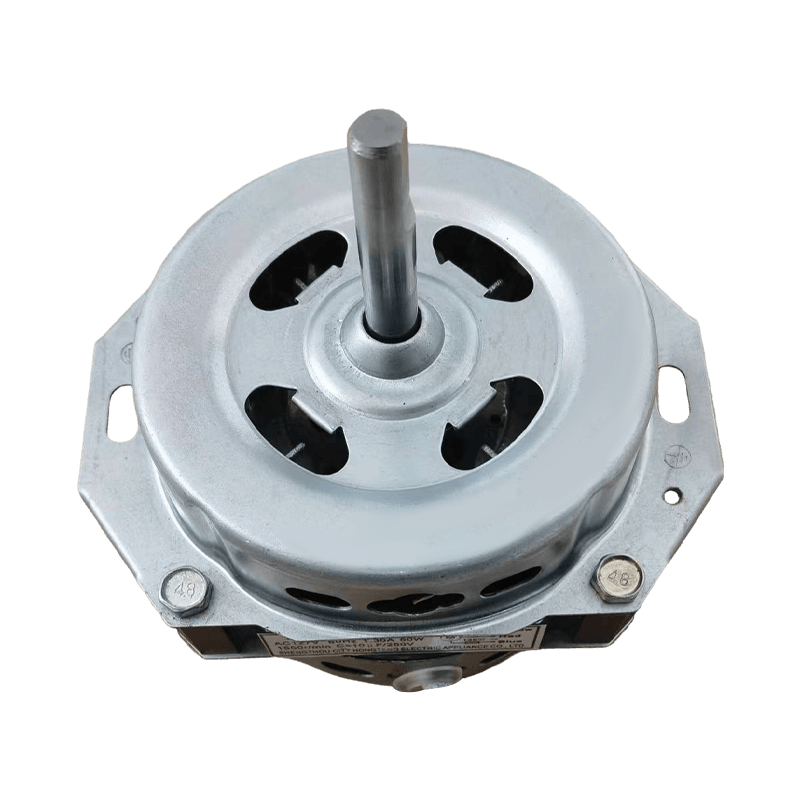
 YYHS-30 Low-Noise Bidirectional Ball Motor for Ceiling VentilatorsLow-noise motor with bidirectional ball bearings and copper windings for integrated ceiling ventilators, bathroom exhaust fans, and kitchen exhaust systems.View Product →
Copper windings, consistent lamination stacking and careful balancing also show up later as lower vibration and steadier airflow. So does shaft quality: a slightly bent shaft or an unbalanced impeller will undo the work of a good motor within weeks, no matter how well the winding was designed.
Centrifugal blowers are everywhere once you start looking. Bathroom exhaust fans, integrated ceiling ventilators, range hoods and air purifiers all rely on them, and so do hand dryers, hair dryers and many tower fans. The common thread is a need for pressure rather than raw air volume.
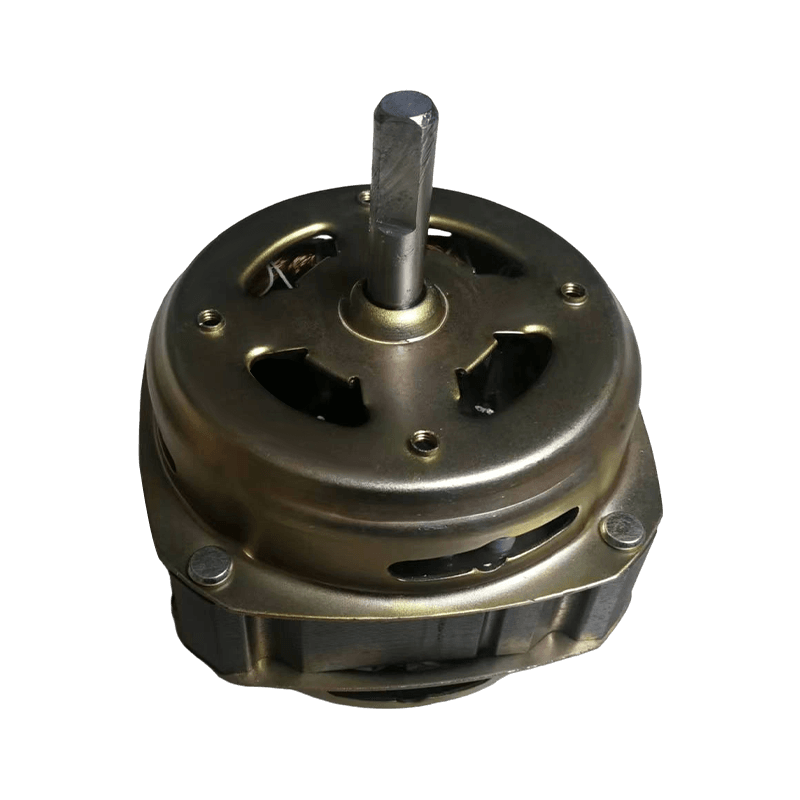
 Air Purifier Motor for Quiet, Continuous OperationHigh-efficiency, low-noise motor with intelligent temperature control, suited to prolonged air cleaning in homes, offices, and hospitals.View Product →
Air purifiers are a good example of how the specification follows the application. The motor has to hold its speed as a filter loads with dust, stay quiet enough to live in a bedroom, and often run for days at a time. That combination pushes designers toward capacitor-run or brushless solutions with well-controlled bearings.
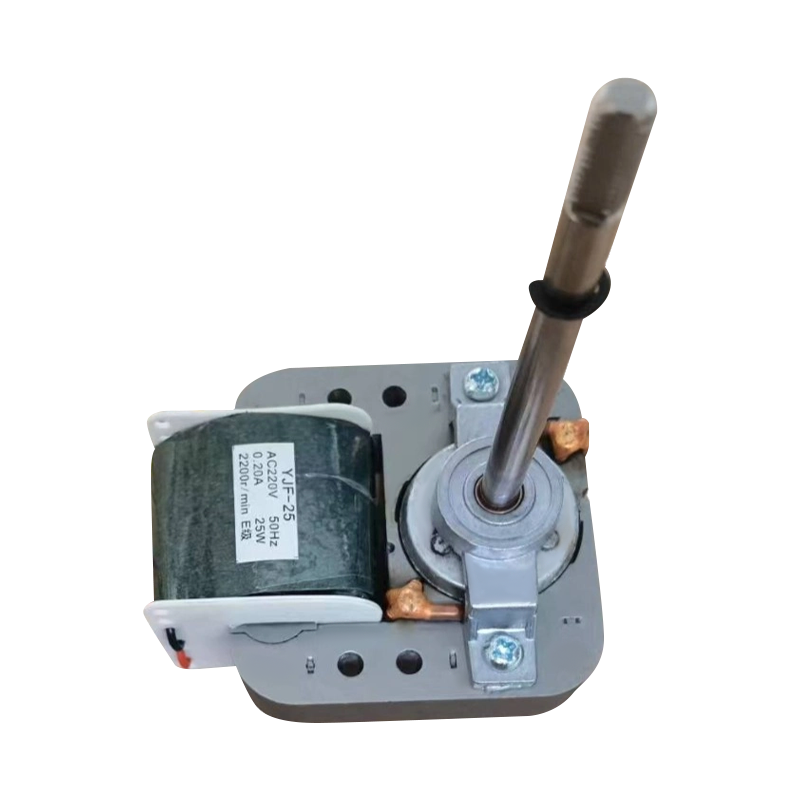
 Quick-Drying Hand Dryer Motor for Public WashroomsHigh-efficiency, low-noise motor delivers powerful airflow and waterproof, dustproof durability for hospitals, restaurants, airports, and busy commercial washrooms.View Product →
Hand dryers sit at the opposite end of the spectrum: short bursts, high speed, and a blower that must move a lot of air through a small nozzle. Hair dryers are similar, using compact high-speed motors and centrifugal impellers to generate the airflow that makes them useful. Different duties, but the same basic question about matching motor torque to impeller load.
We are Shengzhou Hongteng Electric Appliance, based in the motor industrial park of Changle town in Zhejiang. For more than two decades we have designed and manufactured small motors for exhaust fans, ventilation units, air conditioning fans, tower and oscillating fans, and other household appliances. Everything is produced in our own factory, which is why we can quote short lead times and adjust a winding rather than start over.
That flexibility matters most on export projects. The same appliance model may ship to markets with different grids, so we build the same motor platform in different voltage and frequency versions, and in two-speed or three-speed configurations where the product needs user control. You can see how that works in practice across our exhaust fan motor range, where several models are built specifically for individual country markets.
If you have an impeller, an airflow target and a housing, we can usually suggest two or three motor options to test. Send us the details and we will tell you honestly which one fits — and which one will not.
Centrifugal fan motors reward careful matching more than almost any other small motor application. Speed, pressure and power are tied together by simple physics, and the motor that looks correct on a data sheet only proves itself once it is turning your impeller inside your housing. Start with the airflow and pressure you need, work back to speed and torque, then choose bearings and windings that suit the environment the appliance will live in. Do that, and the motor becomes the least troublesome part of the design.
Recommended Products

Contact Us
+86 0575 83078988
+86 13605855838
+86 17769850789
13605855838
No. 20, Zhiye Road, Changle Town, Shengzhou City, Shaoxing City, Zhejiang Province
Contact Us
 Custom Mini AC Motor Manufacturers